When a furnace stops working in the middle of winter, most homeowners want one answer fast: how much does it cost to replace my furnace? If you are searching for honest, detailed pricing guidance rather than vague estimates, you are in the right place. Whether you are in the early planning stages or facing an emergency replacement, understanding the true cost of a new furnace, including equipment, labor, and hidden expenses, helps you make a confident decision. For guidance specific to your home, consulting a qualified furnace replacement specialist is always a wise first step. This guide breaks down every cost factor, explains what affects your final bill, and shares practical tips to reduce spending without compromising on quality.
What Does a Full Furnace Replacement Actually Cost?
The national average cost to replace a furnace ranges from $2,500 to $7,500, with most homeowners spending somewhere between $3,500 and $5,500 when all costs are factored in. However, these numbers alone do not tell the full story. Your actual price depends on a wide range of variables, which we will break down in detail.
Equipment Costs
The furnace unit itself is often the largest single expense. Prices vary significantly based on the type, brand, and efficiency rating of the system.
Gas furnaces are the most common choice in North American homes and typically cost:
- Single-stage units: $800 to $1,500
- Two-stage units: $1,200 to $2,200
- Modulating units: $1,800 to $3,500
Electric furnaces tend to have lower upfront costs, ranging from $500 to $2,000, but they usually carry higher monthly operating costs because electricity is more expensive than natural gas in most regions.
Oil furnaces fall in a similar price range to gas units but are less common and tend to carry higher fuel costs in most parts of the country.
The Annual Fuel Utilization Efficiency (AFUE) rating also plays a major role in equipment pricing. A standard efficiency furnace with an 80% AFUE rating will cost less upfront than a high-efficiency model rated at 96% to 98% AFUE. According to the U.S. Department of Energy, upgrading to a high-efficiency furnace can reduce heating costs by up to 15% annually, which can offset the higher initial investment over time.
Labor and Installation Costs
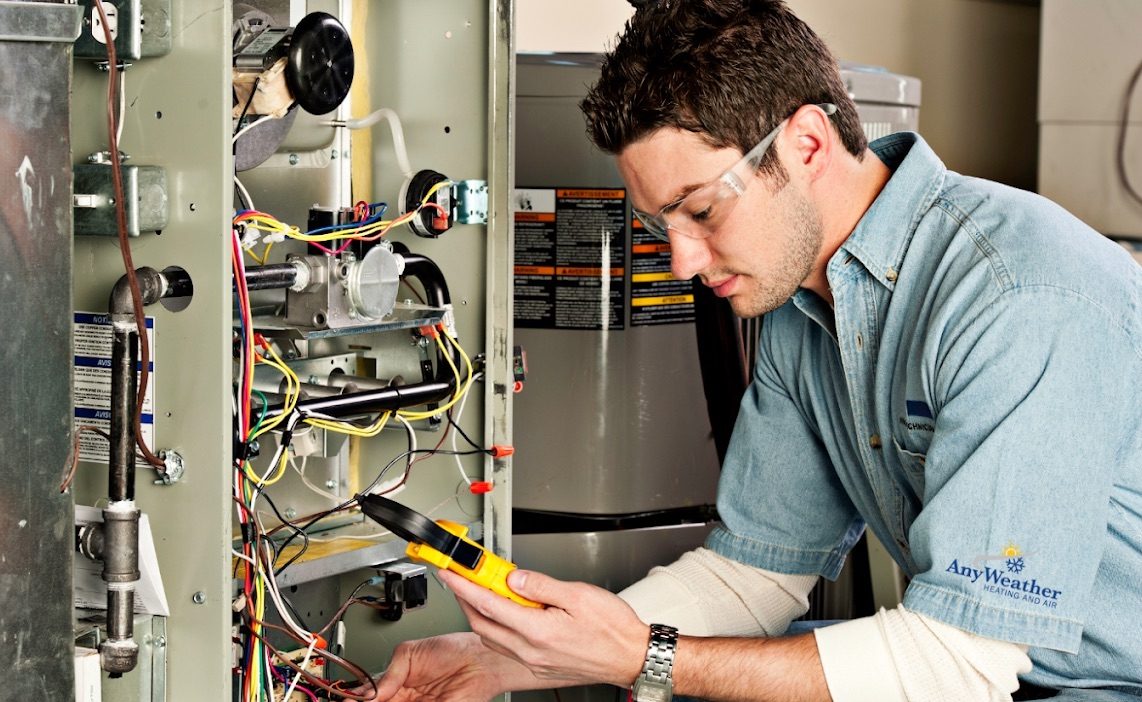
Labor is a significant part of the total bill. Most HVAC contractors charge between $500 and $2,500 for installation, depending on:
- The complexity of the job
- Whether ductwork modifications are needed
- Local labor rates in your area
- Whether permits are required
A straightforward swap of a similar-sized unit in an accessible location costs less than a more involved installation that requires rerouting venting, upgrading electrical connections, or modifying existing ductwork.
Hidden and Additional Costs to Budget For
Many homeowners are surprised by additional charges that can push the final price higher than expected. Here are the most common ones to watch for:
Permits and inspections: Most jurisdictions require a permit for furnace replacement. Permit fees typically range from $50 to $300, and your contractor should handle this on your behalf.
Ductwork repairs or upgrades: If your existing ductwork is old, leaky, or undersized for a new system, repairs or partial replacement can add $300 to $1,000 or more to your bill.
Removal and disposal of the old unit: Some contractors include this in their quote, while others charge separately. Expect to pay $50 to $150 for old unit removal if it is not bundled in.
New thermostat: Upgrading to a programmable or smart thermostat during a furnace replacement makes sense logistically and costs $50 to $300 depending on the model.
Flue and venting upgrades: High-efficiency furnaces require PVC venting instead of traditional metal flues. If your home needs new venting installed, this can add $200 to $700 to the job.
Carbon monoxide detectors: If your existing detectors are outdated, this is the right time to replace them. Budget $20 to $60 per unit.
Key Factors That Affect Your Furnace Replacement Price
Understanding what drives the cost up or down puts you in a better position to plan and negotiate.
1. Furnace Size (BTU Capacity)
A furnace must be correctly sized for your home. Contractors calculate the required heating capacity using a load calculation based on your home’s square footage, insulation levels, ceiling height, and climate zone. An oversized or undersized unit will not heat your home efficiently and can lead to premature wear.
Larger homes require higher BTU output, which means higher equipment costs. Do not assume a bigger unit is always better: proper sizing is more important than raw output.
2. Fuel Type
Natural gas furnaces are the most cost-effective to operate in most of the United States. Electric furnaces have lower installation costs but higher monthly bills. If you want to switch from oil to gas, you will need to factor in the cost of connecting to the gas line, which can add $500 to $2,000 to the project.
3. Efficiency Rating
As mentioned, high-efficiency units cost more upfront but save money on utility bills. In colder climates where the furnace runs heavily for five to six months of the year, the payback period for a 96% AFUE furnace over an 80% unit is often three to seven years.
4. Installation Complexity
A simple like-for-like replacement in a standard basement installation is far less expensive than a job that involves:
- Moving the furnace to a new location
- Replacing or significantly modifying ductwork
- Installing new venting systems
- Upgrading the electrical panel to handle increased load
5. Contractor and Region
Labor rates vary widely by region. Urban markets typically have higher labor costs than rural areas. Getting at least three written quotes from licensed, insured contractors is the most reliable way to understand your local pricing landscape.
6. Time of Year
Demand for HVAC services peaks during fall and early winter. Scheduling a replacement in late spring or summer, when contractors have more availability, can sometimes result in better pricing or faster service.
Smart Tips to Save Money on Furnace Replacement
Saving money on a furnace replacement does not mean cutting corners. With the right approach, you can significantly reduce costs while still getting a reliable, efficient system.
Get Multiple Quotes
This is the single most effective way to avoid overpaying. Contact at least three licensed HVAC contractors in your area and ask for itemized written estimates. Be cautious of quotes that are significantly lower than the others, as this can sometimes signal inferior equipment, unlicensed work, or hidden fees that appear later.
Ask About Rebates and Incentives
The ENERGY STAR program and many utility companies offer rebates for homeowners who install high-efficiency heating equipment. Federal tax credits are sometimes available for qualifying systems. Some manufacturers also offer promotional rebates at certain times of year. Ask your contractor which rebates your new system qualifies for before signing any agreement.
Consider Financing Options
Many HVAC companies offer financing with promotional terms such as zero interest for 12 to 24 months. This allows you to install a higher-quality unit now and pay for it over time without paying a penalty in interest, as long as the balance is paid off within the promotional window.
Do Not Automatically Choose the Lowest Bid
The cheapest quote is rarely the best value. A low-bid contractor may be using builder-grade equipment, skipping necessary permits, or providing a minimal installation that leads to problems down the road. Evaluate contractors on their licensing, insurance, reviews, and warranty terms, not just price.
Schedule Off-Season if You Can
If your furnace is aging but still functional, planning a proactive replacement in late spring or summer rather than waiting for an emergency can save money. Emergency calls during peak heating season often come with premium pricing, and you will have less time to compare options.
Ask About Extended Warranties
Most furnace manufacturers offer limited warranties ranging from 5 to 20 years on heat exchangers and parts. Some contractors offer extended labor warranties as well. Investing in extended coverage can protect you from large repair bills in the years after installation.
Maintain Your New System
After installation, regular maintenance including annual tune-ups and filter replacements every one to three months keeps your furnace running efficiently and extends its lifespan, giving you the best possible return on your investment.
Wrapping It All Up: What to Expect When Budgeting for a New Furnace
Replacing a furnace is a meaningful investment in your home’s comfort and energy efficiency. While the upfront cost can feel significant, improved energy performance, modern reliability, and reduced repair bills make a well-planned replacement a sound financial decision for most homeowners.
The most important takeaways are simple: understand all cost components before signing a contract, get multiple quotes from licensed professionals, explore available rebates and incentives, and choose the right efficiency level for your climate and long-term plans.
If you are ready to explore your options with experienced local professionals who can walk you through equipment choices, pricing, and installation timelines, you can find a trusted HVAC provider near you to get started.
Frequently Asked Questions
Q1: How long does a furnace replacement take?
Most standard furnace replacements take between four and eight hours for experienced HVAC technicians. More complex jobs involving ductwork modifications, new venting, or additional system upgrades may take a full day or longer. Your contractor should be able to give you a realistic time estimate when they assess the job.
Q2: How do I know if my furnace needs replacement rather than repair?
A general rule of thumb is to replace a furnace if the repair cost exceeds 50% of the cost of a new unit, or if the system is more than 15 to 20 years old and experiencing frequent breakdowns. Consistently high heating bills despite regular maintenance, uneven heating throughout the home, and visible signs of wear such as cracks in the heat exchanger are also strong indicators that replacement is the more cost-effective path.
Q3: What size furnace do I need for my home?
Furnace sizing is based on a Manual J load calculation, which accounts for your home’s square footage, insulation quality, ceiling height, window area, local climate, and other factors. A properly sized furnace is critical for efficiency and comfort. Reputable HVAC contractors will perform this calculation rather than simply matching the size of your old unit.
Q4: Is a high-efficiency furnace worth the extra cost?
For most homeowners in climates with cold winters, a high-efficiency furnace (90% AFUE or above) is worth the additional upfront investment. Energy savings can add up to hundreds of dollars per year, with a typical payback period of three to seven years depending on local energy rates. In milder climates with shorter heating seasons, the payback period may be longer.
Q5: What happens if I skip getting a permit for furnace replacement?
Installing a furnace without the required permits can invalidate your homeowner’s insurance, create liability issues if something goes wrong, and cause complications when you sell your home. Always confirm that your contractor is pulling the necessary permits as part of the installation process.
Excellent article that respects both facts and readers. This
platform is quietly outstanding.