Keeping your home comfortable during warm months depends heavily on having a reliable air conditioning system. Yet one of the most overlooked aspects of homeownership is routine upkeep of that system. AC maintenance is not just a recommendation from HVAC technicians trying to sell a service visit. It is a proven practice that protects your investment, keeps energy bills in check, and prevents the kind of unexpected breakdowns that always seem to happen on the hottest day of the year. Understanding how often to schedule maintenance and what is at stake when you skip it can save you significant time, money, and frustration.
How Often Should You Schedule AC Maintenance?
The general industry standard, backed by organizations like the U.S. Department of Energy, is to have your air conditioning system professionally serviced at least once per year. For most homeowners, the best time to schedule that visit is in the spring, ideally before temperatures climb and you begin relying on the system daily.
Here is a simple breakdown of recommended maintenance timing:
- Once a year minimum: A professional tune-up each spring keeps the system primed for heavy summer use.
- Twice a year for older systems: Units that are 10 years or older benefit from an additional fall inspection to catch wear before winter storage.
- Twice a year for year-round climates: In regions where air conditioning runs nearly all year, scheduling a spring and fall visit ensures continuous performance.
- Monthly DIY checks: Homeowners should inspect and replace air filters every 30 to 90 days depending on usage, pets, and indoor air quality needs.
If your home has a heat pump that handles both cooling and heating, twice-yearly professional service is strongly recommended since the system works in both seasons.
The Air Conditioning Contractors of America (ACCA) emphasizes that consistent maintenance schedules are one of the most effective ways to extend equipment life and maintain efficiency ratings over time.
What Does a Professional AC Maintenance Visit Include?
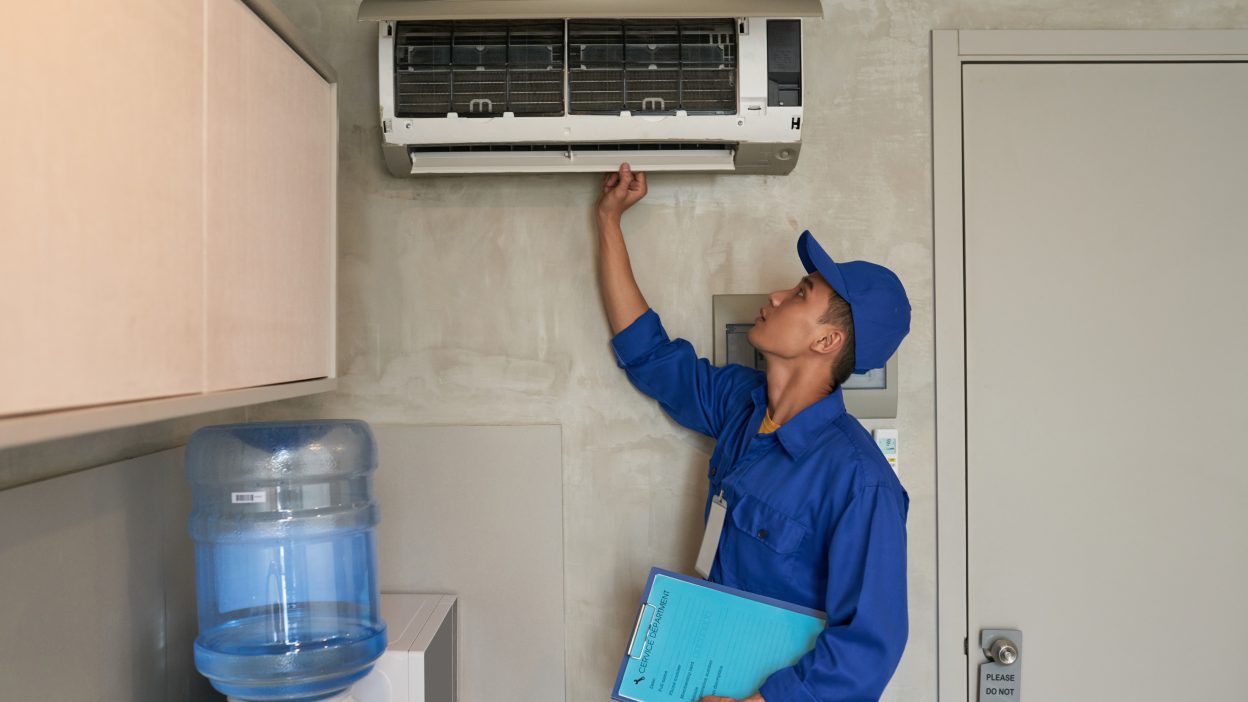
Understanding what happens during a professional tune-up helps clarify why these visits are valuable. A qualified HVAC technician will typically perform the following tasks:
- Inspect and clean the evaporator and condenser coils to remove dirt buildup that reduces heat transfer efficiency
- Check refrigerant levels and inspect for leaks, since low refrigerant forces the system to work harder
- Lubricate moving parts such as fan motors and bearings to reduce friction and wear
- Inspect the condensate drain line to ensure it is clear and draining properly, preventing water damage and mold growth
- Test electrical connections and components including capacitors, contactors, and wiring for signs of wear or failure
- Calibrate the thermostat to ensure accurate temperature readings and efficient cycling
- Check airflow across the blower and clean the blower assembly if needed
- Inspect ductwork connections for leaks that reduce system efficiency
According to ENERGY STAR, a properly maintained air conditioner can operate up to 15% more efficiently than a neglected one, which translates directly to lower monthly utility bills.
What Happens When You Skip AC Maintenance?
Skipping annual maintenance might seem harmless, especially if your system appears to be running fine. However, the consequences of neglect tend to compound over time. Here is what homeowners often experience when they go without regular servicing:
1. Higher Energy Bills
Dirt and debris accumulation on coils, clogged filters, and low refrigerant all force your air conditioner to work harder to reach the same temperature. This increased workload drives up electricity consumption. The Environmental Protection Agency notes that HVAC systems account for nearly half of a home’s total energy use, making efficiency losses especially costly.
2. Reduced Cooling Performance
When airflow is restricted or components are dirty, the system struggles to cool your home effectively. You may notice uneven temperatures between rooms, longer run cycles, or a system that simply cannot keep up on hot days. These are early warning signs that maintenance has been delayed too long.
3. Increased Risk of Breakdowns
Most major AC failures do not happen randomly. They develop gradually from small issues left undetected and unaddressed. A refrigerant leak that goes unnoticed can eventually damage the compressor, which is one of the most expensive components to replace. Electrical issues left unchecked can cause complete system failure. Routine inspections catch these problems early, when repairs are minor and affordable.
4. Poor Indoor Air Quality
Air filters and coils that are not cleaned regularly become breeding grounds for dust, mold spores, and allergens. These particles circulate through your ductwork and into the air your family breathes every day. For households with allergy sufferers, asthma patients, or young children, this is a serious health concern. The American Lung Association highlights indoor air pollution as a significant contributor to respiratory issues.
5. Shortened System Lifespan
The average central air conditioning system is designed to last between 15 and 20 years with proper care. Skipping maintenance accelerates wear on critical components and can shorten that lifespan by several years. Replacing an entire HVAC system is a significant expense, often ranging from several thousand to over ten thousand dollars depending on the size and complexity of the installation.
6. Voided Manufacturer Warranties
Many air conditioning manufacturers require documented proof of annual professional maintenance to keep warranty coverage valid. If a major component fails and you cannot demonstrate that the unit was properly serviced, the manufacturer may deny the warranty claim, leaving you responsible for the full repair cost.
Seasonal Maintenance Tips Homeowners Can Handle
While professional service is essential, there are steps you can take between visits to keep your system running smoothly:
- Replace air filters regularly: Check filters monthly and replace them every one to three months. A clogged filter is one of the leading causes of AC inefficiency.
- Keep the outdoor unit clear: Remove leaves, grass clippings, and debris from around the condenser unit. Maintain at least two feet of clearance on all sides.
- Clean the condensate drain pan: Inspect the drain pan beneath the indoor air handler periodically. A full or clogged pan can cause water damage and mold growth.
- Check your thermostat settings: Programmable and smart thermostats can significantly reduce energy use when properly configured.
- Listen for unusual sounds: Rattling, banging, or hissing sounds are early indicators of a mechanical issue that warrants a professional inspection.
These simple habits between professional visits can reduce strain on the system and help your technician spend their time on deeper diagnostics rather than basic cleaning tasks.
The Financial Case for Regular Maintenance
Some homeowners hesitate to schedule maintenance because of the upfront cost of a service visit. However, the math strongly favors regular upkeep over reactive repairs.
A standard annual maintenance visit typically costs between $75 and $200 depending on location and what is included. Compare that to the cost of replacing a compressor ($1,500 to $2,500) or a full system replacement ($5,000 to $12,000 or more). Investing in preventive maintenance is significantly less expensive than paying for avoidable repairs.
The energy savings from a well-maintained system also add up throughout the cooling season. If your system is running 15% more efficiently because of a clean tune-up, that saving appears on every monthly utility bill from May through September.
Finding Qualified HVAC Professionals
Not all service providers offer the same level of care. When selecting a technician, look for the following:
- NATE certification (North American Technician Excellence), which is an industry-recognized credential for HVAC professionals
- Licensed and insured in your state
- Clear written estimates before work begins
- Transparent maintenance checklists so you know exactly what the visit covers
If you are searching for a trusted local provider, this AC maintenance service location can help connect you with experienced HVAC professionals in your area.
Wrapping It All Up: Why Consistent AC Maintenance Matters
Regular AC maintenance is one of the most straightforward and cost-effective ways to protect your home comfort system. Scheduling a professional tune-up once a year in the spring, or twice a year for older or year-round systems, keeps your air conditioner operating at peak efficiency, extends its working life, and reduces the risk of unexpected breakdowns.
Skipping maintenance might seem like a way to save money in the short term, but the compounding effects of neglect, from higher energy bills and reduced performance to system failure and voided warranties, make it a costly gamble. By pairing routine professional service with simple monthly upkeep tasks, homeowners can enjoy reliable, efficient cooling for years to come.
Treating your air conditioner like the significant investment it is starts with one simple step: putting that annual service appointment on the calendar before cooling season begins.
Frequently Asked Questions
About AC Maintenance
1. How often should I schedule professional AC maintenance?
Most HVAC experts and industry organizations recommend professional AC maintenance at least once per year, ideally in the spring before the cooling season begins. Homeowners with older systems, year-round climates, or heat pumps benefit from scheduling two visits per year.
2. Can I perform AC maintenance myself?
Homeowners can handle basic upkeep such as replacing air filters every one to three months, clearing debris from around the outdoor unit, and checking the condensate drain pan. However, tasks like checking refrigerant levels, inspecting electrical components, and cleaning coils require professional tools and training and should not be attempted without proper certification.
3. What are the signs that my AC needs maintenance?
Common signs include higher than usual energy bills, uneven cooling throughout the home, unusual noises like rattling or hissing, weak airflow from vents, the system running longer than normal to reach the set temperature, and visible ice forming on the unit. Any of these symptoms warrant a professional inspection.
4. Will skipping maintenance void my AC warranty?
Many manufacturers include a maintenance requirement in their warranty terms. Without documented proof of annual professional service, warranty claims for major component failures may be denied. Always review your warranty documentation and keep records of every service visit.
5. How long does a professional AC maintenance visit typically take?
A standard professional tune-up generally takes between one and two hours depending on the size and condition of the system. If the technician discovers issues requiring additional work, such as a refrigerant recharge or electrical repairs, the visit may take longer. Scheduling in spring also tends to result in quicker appointment availability.
6. Does regular maintenance really lower energy bills?
Yes. According to ENERGY STAR, a properly maintained air conditioning system can operate up to 15% more efficiently than one that has been neglected. This efficiency gain shows up in monthly utility costs, particularly during peak summer months when the system runs most frequently.