
Choosing the right gutter system can feel overwhelming, especially when you’re comparing options like seamless gutters vs box gutters, gutter guards, and custom flashing in Covington, KY. Each system serves a specific purpose, and the best choice depends on your home’s architecture, roof pitch, rainfall exposure, and long-term maintenance goals. If you are a homeowner in the Northern Kentucky or Greater Cincinnati area, understanding how these systems differ is the first step toward making a smart, lasting investment. For homeowners dealing with older or flat-roof structures, box gutters in Cincinnati are a particularly important option to understand before committing to a replacement or upgrade.
This guide breaks down the most common gutter systems, explains when each one is the right fit, and outlines why professional installation with proper custom flashing is critical to long-term drainage performance.
Understanding the Different Types of Gutter Systems
Seamless Gutters
Seamless gutters are the most widely installed gutter type in modern residential construction. Unlike sectional gutters that come in pre-cut lengths joined together at seams, seamless gutters are fabricated on-site from a single continuous piece of metal, typically aluminum, steel, or copper, cut to the exact length of your roofline.
The absence of seams is a major functional advantage. Seams are the most common failure point in traditional gutters because they are where debris accumulates, joints expand and contract with temperature changes, and leaks develop over time. With seamless gutters, those vulnerabilities are essentially eliminated along the run of the gutter, leaving only the corners and end caps as potential weak points.
Key advantages of seamless gutters:
- Reduced leaking due to fewer joints
- Lower long-term maintenance compared to sectional systems
- Custom-fit to your home’s exact measurements
- Available in a wide range of colors and materials
- Cleaner, more finished appearance
Seamless gutters are best suited for homes with standard sloped roofs and moderate to high rainfall exposure. They perform well in climates like Northern Kentucky and Cincinnati, where seasonal storms and freeze-thaw cycles put stress on drainage systems. According to the National Roofing Contractors Association, proper gutter installation and maintenance is one of the most effective ways to prevent water intrusion and foundation damage.
Box Gutters
Box gutters, sometimes called built-in gutters, are a traditional gutter system integrated directly into the roofline rather than attached to the fascia as a separate component. They are commonly found on older homes, historic properties, and structures with low-slope or flat roof sections.
Unlike the familiar K-style or half-round profiles that hang along the edge of a roof, box gutters sit inside a wooden trough built into the eave structure of the home. This design gives the roofline a clean, uninterrupted look, which is why they were popular in Craftsman, Colonial, and Victorian architecture.
However, because box gutters are embedded in the roof system, they require more attention to waterproofing and flashing. When they fail, the damage can be significant. Water can infiltrate the roof deck, fascia boards, and interior framing before any visible signs appear on the outside of the home.
When box gutters are the right choice:
- Historic or architecturally significant homes where the original design must be preserved
- Buildings with wide eave overhangs that make surface-mounted gutters impractical
- Structures where a clean roofline aesthetic is a priority
- Commercial or mixed-use buildings with flat or low-slope roof sections
If your home already has box gutters, proper lining, waterproofing, and flashing maintenance are essential. Neglected box gutters are one of the leading causes of hidden rot and structural damage in older homes. For a deeper look at how box gutters work in this region, this overview of box gutters in Cincinnati covers common issues and repair considerations specific to the local climate.
Gutter Guards
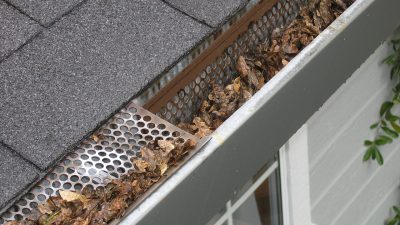
Gutter guards are not a standalone gutter system but rather an accessory added to existing gutters to reduce debris accumulation. They sit over or inside the gutter channel and are designed to allow water in while keeping leaves, twigs, and other debris out.
There are several types of gutter guards, each with different performance characteristics:
- Mesh screens: Fine metal or plastic mesh that filters out debris while allowing water to pass through. They perform well in areas with heavy tree coverage.
- Reverse curve guards: Water follows the curve and drops into the gutter while debris falls off the edge. These can struggle in heavy rainfall.
- Foam inserts: Porous foam placed inside the gutter that allows water to seep through while blocking debris. They can harbor mold and deteriorate over time.
- Brush guards: Similar to foam inserts but made of cylindrical brushes. Debris tends to get caught in the bristles rather than staying out.
- Micro-mesh guards: A more refined version of standard mesh with very fine openings. These are considered among the most effective options currently available.
The International Association of Certified Home Inspectors notes that while gutter guards reduce cleaning frequency, they do not eliminate maintenance entirely. Regular inspection is still necessary to check for debris buildup on top of guards and to ensure the system has not shifted or become damaged. Gutter guards work best as a complement to a well-functioning gutter system, not a replacement for one.
Choosing the Right Gutter System Based on Home Type and Drainage Needs
There is no universal answer to which gutter system is best. The right choice depends on several factors specific to your property.
Consider seamless gutters if:
- Your home has a standard sloped roof
- You want a low-maintenance, leak-resistant option
- You are doing a full gutter replacement or new construction
- Curb appeal and a clean profile matter to you
Consider box gutters if:
- Your home is historic and requires a built-in design
- You are restoring an existing box gutter system rather than replacing it
- Your roofline cannot accommodate a surface-mounted gutter without compromising the aesthetic or structure
Consider adding gutter guards if:
- You have significant tree canopy around your home
- You want to reduce seasonal maintenance
- Your existing gutters are in good condition but clog frequently
It is also worth considering local climate conditions. In the Greater Cincinnati and Northern Kentucky area, homes experience heavy spring rainfall, ice accumulation in winter, and significant leaf fall in autumn. All of these conditions stress drainage systems differently. The University of Kentucky Cooperative Extension Service has published resources on stormwater management that highlight how proper gutter sizing and drainage planning can protect foundations and landscaping from erosion over time.
Why Professional Installation and Custom Flashing Matter
Even the highest-quality gutter system will underperform if it is improperly installed. Two of the most common issues that arise from DIY or low-quality gutter installation are incorrect pitch and inadequate flashing.
Gutter pitch refers to the slight angle at which the gutter is installed so water flows toward the downspout rather than pooling. A standard recommendation is a quarter-inch drop for every ten feet of gutter run. Even minor errors in pitch can cause standing water, which accelerates corrosion, invites mosquito breeding, and adds excessive weight that pulls gutters away from the fascia.
Custom flashing is the metal material installed at the transition points between the gutter system and the roof edge, fascia, or adjacent walls. It directs water into the gutter channel and prevents it from sneaking behind the gutter and into the structural components of the home. Improperly fitted or missing flashing is one of the most frequent causes of water damage in areas that would otherwise appear dry from the outside.
For box gutters in particular, lining integrity and flashing integration are critical. Because these systems are embedded in the roof, a failing sealant or poorly fitted liner can allow water to sit on wood for extended periods, leading to rot that is often invisible until it becomes a significant structural problem.
Professional installers also ensure proper downspout placement and sizing. Downspouts that are too small or spaced too far apart cannot handle peak rainfall volume, leading to overflow that deposits water directly against the foundation.
Final Thoughts on Selecting a Gutter System
Making the right gutter decision comes down to understanding your home’s specific needs rather than choosing based on price or popularity alone. Seamless gutters offer excellent performance and low maintenance for most modern homes. Box gutters remain the appropriate solution for historic and architecturally distinct properties where built-in drainage is part of the original structure. Gutter guards can extend the life and reduce the upkeep of either system when chosen carefully.
What ties all of these options together is the quality of installation. A properly pitched, securely fastened, correctly flashed gutter system protects your home’s foundation, siding, fascia, and landscaping from water damage for decades. Cutting corners during installation, regardless of the materials chosen, introduces vulnerabilities that compound over time.
Homeowners in the Covington, KY area looking for local guidance can also explore this local listing to find experienced roofing and gutter professionals familiar with the region’s climate and code requirements.
Frequently Asked Questions
1. What is the main difference between seamless gutters and box gutters?
Seamless gutters are surface-mounted along the fascia and made from a single continuous piece of material to reduce leaking. Box gutters are built into the roofline itself, typically found on older or historic homes. Both manage roof drainage, but they differ in design, maintenance requirements, and ideal use cases.
2. Do gutter guards actually work?
Gutter guards can significantly reduce how often you need to clean your gutters, but they do not eliminate maintenance entirely. Micro-mesh guards tend to perform best across a variety of debris types. The effectiveness of any guard depends on the type selected, how well it is installed, and the surrounding environment.
3. How do I know if my home needs box gutters or seamless gutters?
If your home was built before the mid-20th century or has a wide eave with a built-in trough, it likely has or originally had box gutters. For newer homes with standard rooflines, seamless gutters are typically the better fit. A professional inspection can identify which system is appropriate for your specific structure.
4. Why is custom flashing important for gutter installation?
Custom flashing seals the transitions between the gutter and the roof edge, fascia, or wall. Without proper flashing, water can infiltrate behind the gutter and cause hidden damage to wood framing, insulation, and interior surfaces. It is especially critical for box gutter systems where water is in direct contact with the roof structure.
5. How long do seamless gutters typically last?
Aluminum seamless gutters generally last 20 years or more with proper maintenance. Steel gutters can last longer but are more susceptible to rust in humid climates. Copper gutters have the longest lifespan, often exceeding 50 years, though they come at a higher upfront cost. Regular cleaning, inspection, and prompt repairs are the most reliable ways to extend gutter lifespan regardless of the material chosen.