When it comes to protecting a commercial property from the elements, few decisions carry as much long-term weight as choosing the right roofing system. Liquid applied commercial roofing has emerged as one of the most reliable and versatile options available to building owners and facility managers today. Whether you manage a warehouse, retail center, office complex, or industrial facility, understanding how this system works and what it offers can help you make a more informed investment in your building’s future.
This guide covers everything you need to know about liquid-applied roofing, including how it works, how long it lasts, and how its costs compare to traditional commercial roofing systems.
What Is Liquid-Applied Roofing and How Does It Protect Commercial Buildings?
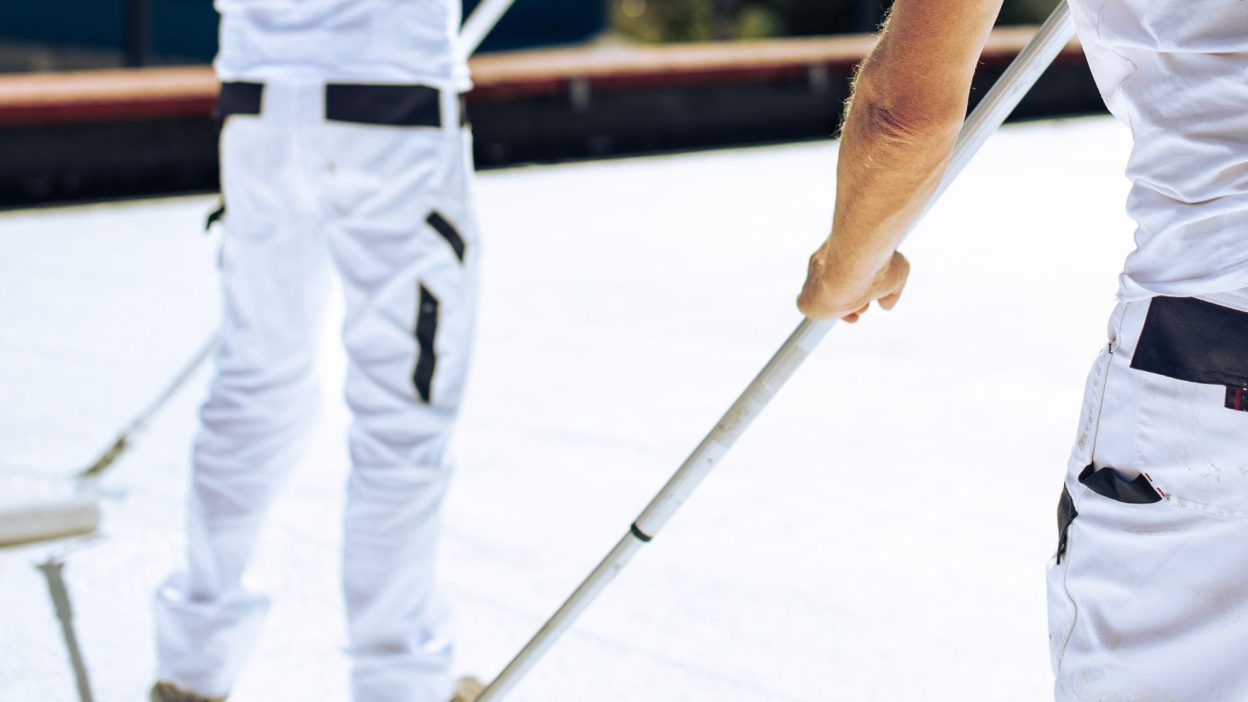
Liquid-applied roofing is a seamless, membrane-based system that is applied directly to a roof surface in liquid form. Once cured, it forms a continuous, flexible, waterproof coating that adheres tightly to the existing substrate. Unlike traditional roofing materials that come in sheets or panels, liquid-applied systems eliminate seams, which are one of the most common points of failure in conventional roofing.
The application process typically involves multiple layers. A primer is often applied first to improve adhesion, followed by one or more base coats, and then a topcoat that provides UV resistance and additional waterproofing. Depending on the product and manufacturer specifications, installers may also embed reinforcement fabrics into the wet coating to improve tensile strength and resistance to cracking.
These systems are compatible with a wide range of roof types, including flat and low-slope roofs, metal roofs, modified bitumen, and even some single-ply membranes. They can be applied over existing roofing materials in many cases, which means building owners may not need a full tear-off before installation.
According to the National Roofing Contractors Association (NRCA), liquid-applied membranes have grown significantly in adoption across the commercial sector due to their ability to conform to complex roof geometries and penetrations without requiring custom fabrication or excessive detailing work.
The seamless nature of the coating means water has no gaps or joints to exploit. When properly installed and maintained, liquid-applied roofing forms a monolithic barrier across the entire roof surface, including around drains, pipes, HVAC units, and parapet walls.
Typical Lifespan and Durability of Liquid-Applied Commercial Roofs
One of the most important questions facility managers ask about any roofing system is how long it will last. The answer for liquid-applied commercial roofing depends on the specific product used, the quality of installation, the local climate, and how consistently the roof is maintained.
In general, a professionally installed liquid-applied roofing system can last between 10 and 25 years. High-performance polyurethane and silicone-based coatings often sit at the upper end of that range, while acrylics may require more frequent recoating. Many manufacturers offer warranty options ranging from 10 to 20 years, with some extended warranties available when installation is performed by certified contractors.
One of the significant durability advantages of these systems is their flexibility. Commercial buildings experience constant expansion and contraction due to temperature fluctuations, and rigid roofing materials can crack or split under this stress over time. Liquid-applied membranes are engineered to stretch and move with the building, which helps prevent cracking and delamination.
Silicone-based liquid coatings, in particular, are known for their resistance to ponding water, a common issue on flat commercial roofs. Unlike some other materials that degrade when water sits on them for extended periods, silicone coatings maintain their integrity under prolonged moisture exposure. The Building Envelope Research group at Oak Ridge National Laboratory has documented the long-term performance of various roofing membranes, noting that properly applied coatings can significantly extend the service life of a commercial roof.
Maintenance also plays a critical role in lifespan. Routine inspections, prompt repair of minor damage, and periodic recoating when the surface shows signs of wear can add years to the life of a liquid-applied system. Many manufacturers and contractors recommend annual inspections and a recoating cycle every 10 to 15 years, depending on the product used and the climate exposure.
Cost Comparison: Liquid-Applied vs Traditional Commercial Roofing Options
Understanding the financial picture of liquid-applied roofing requires looking beyond the upfront installation cost. When compared to traditional options like TPO, EPDM, modified bitumen, or built-up roofing (BUR), liquid-applied systems often present a more favorable total cost of ownership over the life of the roof.
Upfront Installation Costs
Liquid-applied roofing systems generally cost less to install than full membrane replacement systems when applied over an existing substrate in good condition. Because the coating bonds directly to the existing roof, there is often no need for a full tear-off, which can be one of the largest cost drivers in commercial roofing projects. Tear-off and disposal costs for a large commercial roof can run into tens of thousands of dollars, and avoiding that expense provides immediate savings.
For a standard commercial application, liquid-applied systems typically range from $3 to $8 per square foot installed, depending on the product type, number of coats, roof complexity, and regional labor rates. By comparison, a full TPO or EPDM replacement on a large commercial roof can range from $5 to $12 per square foot or more when tear-off costs are included.
Maintenance and Repair Costs
Liquid-applied systems are generally easier and less expensive to repair than traditional roofing. Because the membrane is seamless, damage is usually isolated and can be addressed by cleaning the area and applying additional coating material. There are no seams to re-weld or sheets to patch, which simplifies repair work considerably.
Traditional roofing systems with seams and flashings require more labor-intensive repairs, especially if seam failures or flashing deterioration are involved. Over time, these maintenance costs can add up significantly.
Energy Efficiency Savings
Many liquid-applied coatings are available in highly reflective white or light-colored formulations that meet ENERGY STAR and Cool Roof Rating Council (CRRC) standards. A reflective coating can reduce the roof surface temperature by 50 to 80 degrees Fahrenheit on a hot day, which translates directly to reduced cooling loads for the building. The U.S. Department of Energy estimates that cool roofs can reduce peak cooling demand by 10 to 15 percent in warm climates.
Over a 10 to 20 year period, these energy savings can offset a meaningful portion of the initial installation cost, making the total cost of ownership more competitive than a simple upfront price comparison might suggest.
Longevity and Replacement Cycles
Because liquid-applied systems can often be refreshed and extended with a new topcoat rather than requiring complete replacement, building owners can stretch the intervals between full roof replacements. This reduces the capital expenditure cycle and allows for more predictable facility budgeting.
Additional Advantages Worth Considering
Beyond cost and lifespan, liquid-applied commercial roofing offers several other practical benefits that make it attractive for a wide range of building types.
Minimal Disruption During Installation: The application process is relatively quiet and does not require heavy equipment or large crews in many cases. Building operations can often continue without interruption during installation.
Environmental Considerations: Because these systems can be applied over existing roofing without a full tear-off, they reduce the volume of roofing waste sent to landfills. Many liquid-applied products are also low in volatile organic compounds (VOCs), which supports better indoor air quality during and after installation.
Versatility: Liquid-applied coatings can be applied to complex roof geometries, including curved surfaces, intricate flashing details, and areas with multiple penetrations. This makes them suitable for buildings where sheet-based materials would be difficult to install effectively.
Restoration Capability: For aging commercial roofs that are not yet at the end of their useful life, a liquid-applied coating can restore waterproofing performance and extend service life without the cost and disruption of a full replacement.
Wrapping Up: Is Liquid-Applied Roofing Right for Your Building?
Liquid-applied commercial roofing represents a well-tested, technically sound solution for building owners who want durable, low-maintenance protection with favorable long-term economics. Its seamless construction eliminates one of the most common failure points in traditional roofing systems, while its flexibility and compatibility with existing substrates make it one of the more adaptable options available on the market.
For buildings with flat or low-slope roofs, particularly those dealing with ponding water, aging membranes, or complex penetration details, a liquid-applied system deserves serious consideration. The combination of a reasonable installation cost, low ongoing maintenance requirements, energy efficiency benefits, and the ability to recoat rather than replace makes it a strong candidate for facilities looking to balance performance with budget.
As with any major roofing decision, working with a qualified contractor who has specific experience with liquid-applied systems is essential. Proper surface preparation and application are critical to achieving the full performance and lifespan these products are capable of delivering.
If you are evaluating roofing options for your commercial property, consulting with a local commercial roofing specialist can help you assess whether a liquid-applied system is the right fit for your specific building conditions and goals.
Frequently Asked Questions
Q1: Can liquid-applied roofing be installed over an existing roof without tear-off?
In many cases, yes. Liquid-applied systems are designed to adhere directly to a variety of existing roof substrates, including TPO, EPDM, metal, modified bitumen, and concrete. However, the existing roof must be in acceptable structural condition, properly cleaned, and free of active leaks or saturated insulation. A qualified contractor should perform a moisture survey and condition assessment before installation to confirm that the substrate is suitable.
Q2: How long does it take to install a liquid-applied commercial roofing system?
Installation timelines vary based on roof size, the number of coats required, and weather conditions. Liquid-applied coatings require dry conditions and appropriate temperature ranges for proper curing. For a mid-sized commercial roof, installation may take anywhere from one to several days. The curing time between coats is also a factor, as each layer must reach the appropriate level of cure before the next is applied.
Q3: Are liquid-applied roofing systems suitable for all climates?
Liquid-applied systems are available in formulations suited to a wide range of climates, including hot and humid regions, areas with significant UV exposure, and colder climates with freeze-thaw cycles. Silicone-based products are particularly well-suited to high UV and ponding water environments, while polyurethane formulations offer strong performance in climates with temperature extremes. Always verify that the specific product selected is rated for the climate conditions of your location.
Q4: What maintenance does a liquid-applied commercial roof require?
Routine maintenance for a liquid-applied system typically includes annual visual inspections, clearing of debris from drains and drainage paths, and prompt repair of any areas where the coating has been damaged by foot traffic, equipment, or debris impact. Periodic recoating, typically every 10 to 15 years depending on the product and exposure, can restore the waterproofing performance and extend the roof’s service life. Some manufacturers require documented maintenance to keep extended warranties in force.
Q5: What is the difference between a roofing coating and a roofing membrane?
The terms are sometimes used interchangeably, but there are distinctions. A roofing coating is typically a thinner application intended to restore or enhance an existing roof, offering water resistance and reflectivity but limited standalone structural performance. A liquid-applied roofing membrane is a thicker, reinforced system designed to serve as the primary waterproofing layer. Both are applied in liquid form, but membranes are engineered to meet higher performance standards and are more appropriate for full roofing applications rather than supplemental treatments. When evaluating products, reviewing the manufacturer’s data sheets and ensuring the system meets relevant ASTM or industry standards is important.