
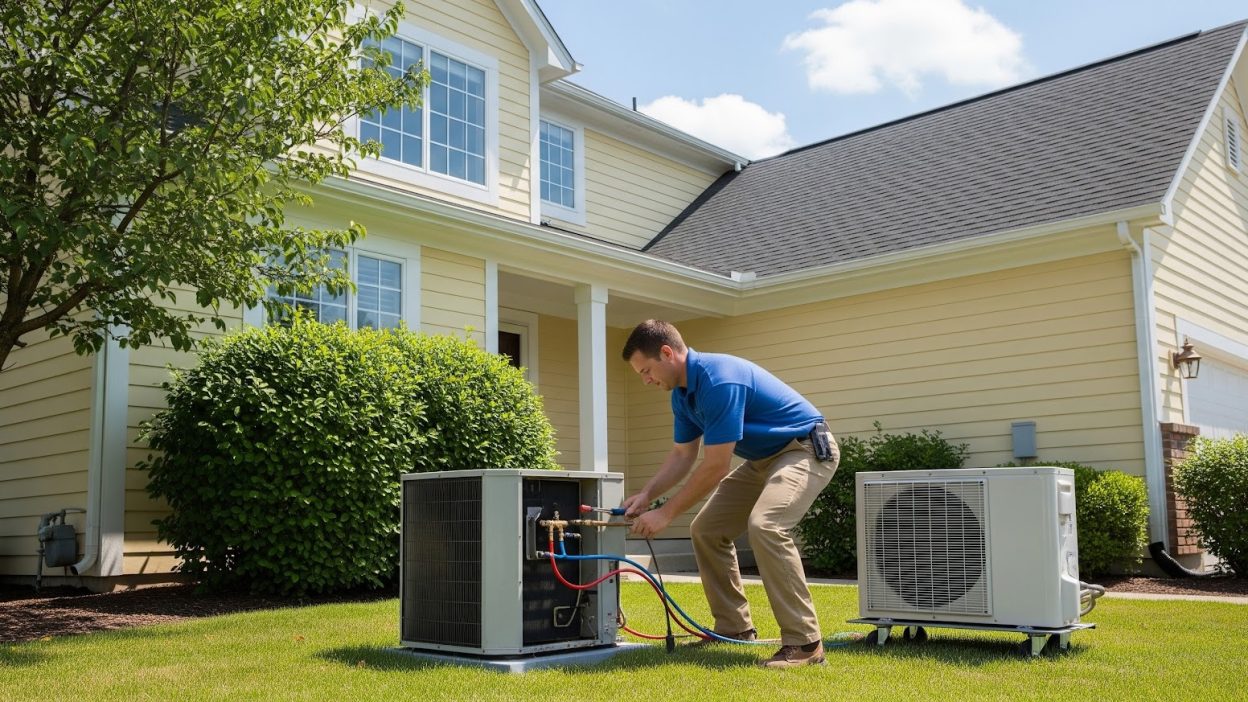
When it comes to keeping your home comfortable through Ohio’s humid summers, choosing the right cooling system is one of the most important decisions you will make as a homeowner. The debate around heat pump vs central air conditioning in Columbus, OH comes down to more than just upfront cost. It involves long-term energy savings, climate compatibility, and year-round versatility. Whether you are replacing a failing unit or planning a new AC replacement and installation, understanding the real differences between these two systems will help you make a confident, well-informed choice.
How Each System Works
Central Air Conditioning
A central air conditioner is a single-purpose cooling system. It works by pulling warm air from inside your home, running it over an evaporator coil filled with refrigerant, and releasing the absorbed heat outside through a condenser unit. The cooled air then circulates through your existing ductwork.
Central AC systems are rated using SEER2 (Seasonal Energy Efficiency Ratio 2), which is the updated federal standard that replaced the older SEER metric in 2023. The higher the SEER2 rating, the more efficient the system is. Most modern central AC units carry SEER2 ratings between 14 and 22.
Heat Pumps
A heat pump is a two-in-one system. It uses the same refrigerant-based technology as a central air conditioner but can reverse the process depending on the season. In summer, it moves heat out of your home just like a standard AC. In winter, it extracts heat energy from outdoor air and moves it inside to warm your home.
Heat pumps are rated using two metrics:
- SEER2 for cooling efficiency, just like central AC
- HSPF2 (Heating Seasonal Performance Factor 2) for heating efficiency
A higher HSPF2 rating means lower heating costs during winter. Most modern heat pumps carry HSPF2 ratings between 7.5 and 10.5. According to the U.S. Department of Energy, heat pumps can deliver one and a half to three times more heat energy than the electrical energy they consume, making them significantly more efficient than traditional electric resistance heating.
Climate Suitability: How Do Heat Pumps Perform in Central Ohio?
This is a critical question for Columbus homeowners. Heat pumps have historically underperformed in very cold climates because older models struggled to extract heat from outdoor air when temperatures dropped below freezing. That reputation is no longer entirely accurate.
Cold-Climate Heat Pumps
Modern cold-climate heat pumps are engineered to operate efficiently down to temperatures of 0 degrees Fahrenheit or even lower. Central Ohio winters regularly see lows in the single digits, with occasional stretches well below zero. Traditional heat pumps from 10 to 15 years ago would have struggled in these conditions, but today’s variable-speed compressor technology maintains strong heating output even in sub-freezing temperatures.
According to ENERGY STAR, certified heat pumps can significantly reduce heating energy use compared to electric baseboard heaters and standard electric furnaces, even in northern climates similar to Columbus.
Should Columbus Homeowners Consider a Dual-Fuel Setup?
A dual-fuel system pairs an electric heat pump with a gas furnace. The heat pump handles heating duties during milder winter days when it operates most efficiently, and the gas furnace takes over during the coldest stretches of the year when running the heat pump alone would be less cost-effective.
For Columbus homeowners who already have a functioning gas furnace, a dual-fuel setup can be a practical middle ground. It captures the efficiency benefits of a heat pump for most of the heating season while relying on natural gas during extreme cold snaps, which can produce meaningful savings over a 15-year ownership window.
Upfront Costs: What to Expect
Cost is usually the first factor homeowners consider, and there is a clear difference between the two systems.
Central AC Installation Costs in Columbus: A standard central air conditioner installation in the Columbus area typically ranges from $3,500 to $7,500 depending on system size, SEER2 rating, and the complexity of the installation. Higher-efficiency models with SEER2 ratings above 18 sit at the upper end of this range.
Heat Pump Installation Costs in Columbus: A heat pump system generally costs more upfront, ranging from $5,000 to $12,000 for equipment and installation. Cold-climate models and those with higher SEER2 and HSPF2 ratings carry higher price tags. A dual-fuel system that includes a backup gas furnace may increase this estimate further.
The price gap is real, but it needs to be evaluated alongside available incentives and long-term operating costs.
Federal and Local Rebates and Incentives
The cost difference between a heat pump and a central AC unit has narrowed significantly because of recent federal incentives. The Inflation Reduction Act introduced the Energy Efficient Home Improvement Credit, which allows homeowners to claim up to 30% of the cost of a qualifying heat pump installation, up to $2,000 per year. This tax credit is available through 2032.
Additionally, Ohio utility providers and programs like Ohio’s Home Weatherization Assistance Program may offer rebates for high-efficiency HVAC equipment. Homeowners should check with their local utility company for current rebate availability, as these programs change regularly.
When combined, federal tax credits and local utility rebates can offset a significant portion of the higher upfront cost of a heat pump.
Total Cost of Ownership Over 15 Years
A 15-year comparison is the most meaningful way to evaluate these two systems because it captures both upfront costs and ongoing utility and maintenance expenses.
Energy Costs
In a Columbus home that uses both heating and cooling, a heat pump can replace both your central AC and your heating system. If your current setup relies on electric resistance heating, switching to a heat pump can cut your annual heating costs dramatically. If you currently use a gas furnace, the comparison is more nuanced and depends on the relative cost of electricity versus natural gas in your area.
For cooling alone, a high-SEER2 heat pump and a comparably rated central AC will perform similarly. The energy savings advantage of a heat pump becomes most visible during the heating months. The American Council for an Energy-Efficient Economy (ACEEE) notes that in most U.S. climates, all-electric heat pumps provide lower annual energy costs than gas heating systems when electricity prices are at moderate levels.
Maintenance Costs
Both systems require annual professional maintenance, including coil cleaning, refrigerant checks, and filter replacement. Heat pumps typically require slightly more frequent servicing because they run year-round rather than only during cooling season. Budget approximately $100 to $200 per year for routine maintenance on either system type.
Heat pump components, including compressors and reversing valves, may carry higher repair costs when something does fail. However, because a heat pump replaces two separate systems (AC plus furnace), you are maintaining one unit instead of two, which can offset this difference.
System Lifespan
Central air conditioners typically last 15 to 20 years with proper maintenance. Heat pumps, because they run year-round, tend to have a slightly shorter lifespan of 12 to 15 years, though this varies considerably based on the quality of the equipment and the consistency of maintenance.
15-Year Cost Summary (Estimates for a Typical Columbus Home)
| Factor | Central AC | Heat Pump |
|---|---|---|
| Equipment and Installation | $4,500 to $7,500 | $6,000 to $12,000 |
| Federal Tax Credit | Not applicable | Up to $2,000 |
| Annual Energy Costs (cooling only) | Comparable | Comparable |
| Annual Energy Costs (heating included) | Higher if electric heat | Potentially lower |
| Maintenance Over 15 Years | $1,500 to $3,000 | $1,500 to $3,000 |
| Heating Equipment Replacement | Separate expense | Included |
For homes replacing both a furnace and an AC unit at the same time, a heat pump often presents a better long-term financial case even with a higher upfront price.
Which System Is the Right Fit for Your Home?
Choose central air conditioning if:
- You have a newer, high-efficiency gas furnace that still has years of useful life remaining
- Your primary concern is minimizing upfront installation cost
- You are cooling a smaller home or a home with zoning needs already addressed by your existing system
Choose a heat pump if:
- You are replacing both your AC and your heating system at the same time
- You want to reduce your home’s reliance on fossil fuels and lower your carbon footprint
- You are interested in capturing federal tax credits and utility rebates to offset initial costs
- You are open to a dual-fuel configuration that optimizes efficiency across all seasons
For most Columbus homeowners who are replacing an aging HVAC system, a cold-climate heat pump or a dual-fuel heat pump system will deliver strong long-term value. The key is working with a qualified HVAC contractor who can perform a proper load calculation and help you choose a system sized correctly for your home.
Final Thoughts: Making the Right HVAC Decision for Columbus Homes
Both heat pumps and central air conditioners are reliable, proven technologies. The best choice depends on your current equipment, your budget, your home’s heating and cooling load, and your long-term goals as a homeowner. Central AC remains a cost-effective solution for homeowners focused solely on cooling or those with functioning gas heating systems. A heat pump, particularly a modern cold-climate model, offers exceptional versatility and long-term savings potential that makes it an increasingly attractive option in Central Ohio.
If you are ready to move forward, working with a trusted local HVAC professional who understands Columbus’s climate will help you make the right call. You can also find local service providers on Google Maps to read reviews and connect with experienced installers in your area.
Frequently Asked Questions
1. Can a heat pump heat a home effectively during an Ohio winter?
Yes. Modern cold-climate heat pumps operate efficiently at temperatures as low as 0 degrees Fahrenheit, covering the vast majority of Columbus winter weather. During extreme cold snaps, a backup heating source such as a gas furnace in a dual-fuel setup can supplement the heat pump.
2. What is the difference between SEER2 and HSPF2?
SEER2 measures cooling efficiency. HSPF2 measures heating efficiency for heat pumps. Both are updated federal standards introduced in 2023 that more accurately reflect real-world operating conditions than the older SEER and HSPF ratings.
3. Are heat pumps eligible for tax credits in Ohio?
Yes. Under the Inflation Reduction Act, qualifying heat pump installations are eligible for a federal tax credit of up to 30% of the installation cost, capped at $2,000 per year, available through 2032. Ohio utility rebate programs may also apply.
4. How long does a heat pump last compared to a central AC unit?
A central air conditioner typically lasts 15 to 20 years. Heat pumps generally last 12 to 15 years because they run year-round. Consistent annual maintenance is the most important factor in extending the lifespan of either system.
5. Is it worth replacing a working gas furnace with a heat pump?
It depends on the age and efficiency of your existing furnace. If your furnace is more than 10 to 12 years old and your AC also needs replacement, doing both at once with a heat pump or dual-fuel system can be cost-effective. If your furnace is newer and highly efficient, replacing your AC alone may make more financial sense.
6. What is a dual-fuel heat pump system?
A dual-fuel system combines an electric heat pump with a gas furnace. The heat pump handles heating and cooling during moderate temperatures, running at peak efficiency. When outdoor temperatures drop significantly, the gas furnace automatically takes over. This setup is well-suited to Columbus’s climate, where both cold winters and warm humid summers are the norm.


The article is smart, concise, and very worthwhile. The entire resource deserves more attention.
I found this article to be good and clear. The site is useful and dependable.
Great article that’s both accurate and engaging. This website is definitely
worth visiting.