
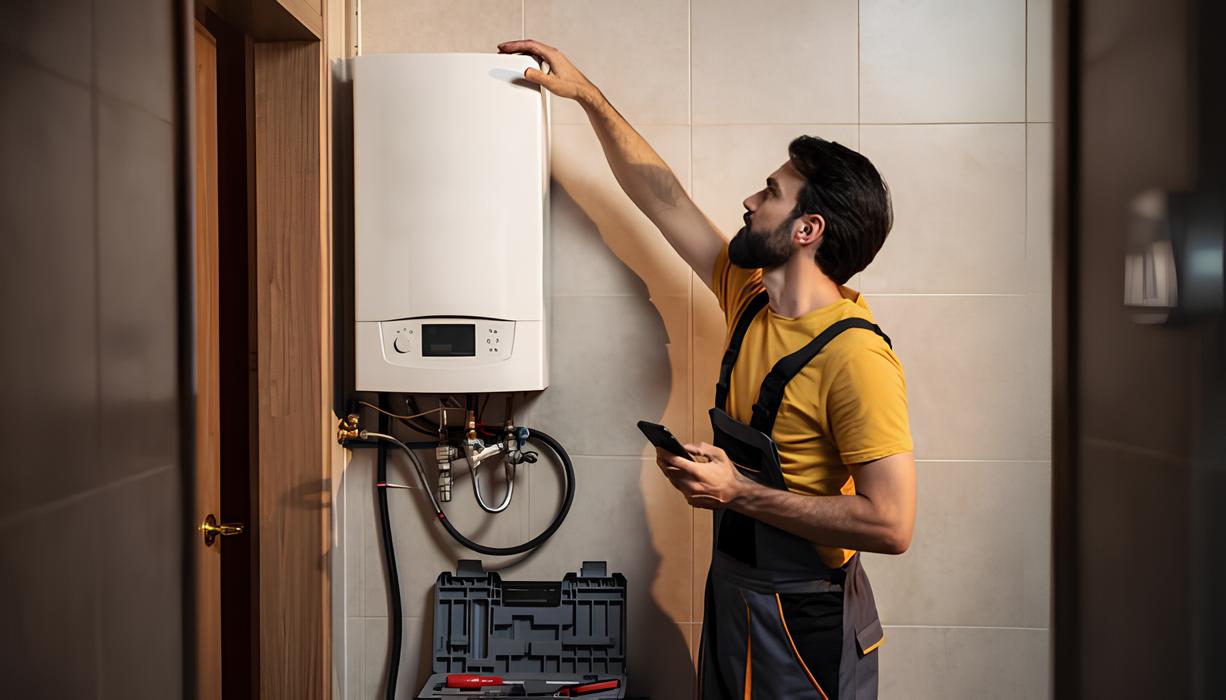
If you have recently inherited or purchased an older home in the Greater Cincinnati area, you have likely come face-to-face with a big decision: keep the existing boiler or switch to a forced-air furnace system? The boiler vs. furnace in Cincinnati, OH debate is one that many local homeowners face, especially given the region’s aging housing stock and cold Ohio winters. Understanding how each system works, what it costs, and when one makes more sense than the other can save you thousands of dollars and years of frustration. Before making any decisions, it is worth consulting a professional for boiler installation in Cincinnati to get an accurate assessment of your specific situation.
How Each System Distributes Heat
The most fundamental difference between a boiler and a furnace is how they deliver warmth into your living space.
Boilers: Radiant Heat
A boiler heats water and circulates it through a network of pipes to radiators, baseboard heaters, or in-floor radiant tubing. The heat then radiates outward from those surfaces, warming the objects and people in the room rather than just the air itself. This is called radiant heat, and it is the method most older Cincinnati homes built before the 1970s were originally designed around.
Radiant heat tends to feel more even and consistent. Because it warms surfaces directly, you are less likely to experience the cold spots near windows and floors that are common with forced-air systems. It also does not rely on ductwork, which means there is no air movement to stir up dust, allergens, or dry out the air in your home.
Furnaces: Forced Air
A furnace burns fuel (typically natural gas or propane) to heat air, then blows that warmed air through a network of ducts and out through vents in each room. This is called forced-air heating, and it is the dominant system installed in homes built after the 1980s across Ohio and most of the United States.
Forced-air systems heat spaces quickly. Turn the thermostat up and you will feel warm air within minutes. However, they also come with trade-offs: blowing air around a room can circulate dust and allergens, the constant cycling of the blower motor creates noise, and the moving air can feel drying to some people, particularly during Cincinnati’s cold and dry winters.
According to the U.S. Department of Energy, the comfort experience between radiant and forced-air heat is genuinely different, and many homeowners who have lived with both systems have a strong preference for one over the other.
Upfront Cost, Efficiency, and Maintenance
Upfront and Installation Costs
The cost comparison between boilers and furnaces is not straightforward, because it depends heavily on what is already in your home.
If your Cincinnati home already has a boiler and radiator system in place, replacing an aging boiler with a new high-efficiency model is typically less expensive than converting the entire home to forced air. A full conversion to forced-air requires installing ductwork throughout the home, which is invasive and expensive, often ranging from $5,000 to $15,000 or more depending on the size and layout of the house, according to HomeAdvisor’s cost data.
A new boiler installation, by contrast, typically ranges from $3,500 to $8,000 for the equipment and labor when the existing piping and radiators are in good condition. A new gas furnace in a home already equipped with ductwork generally runs $2,500 to $6,000 installed.
Energy Efficiency
Modern high-efficiency condensing boilers can achieve Annual Fuel Utilization Efficiency (AFUE) ratings of 90% to 98%, meaning nearly all the fuel burned is converted to usable heat. The ENERGY STAR program certifies boilers that meet strict efficiency thresholds, and many newer models qualify for federal tax credits.
High-efficiency gas furnaces can also reach AFUE ratings in the 95% to 98% range. On paper, both systems can be equally efficient. In practice, however, radiant systems tend to maintain comfort at slightly lower thermostat settings because the heat is felt more directly, which can translate to modest energy savings over time.
Ohio homeowners should also note that Cincinnati experiences average winter lows in the mid-20s Fahrenheit. Both systems are capable of handling these temperatures comfortably when properly sized by a qualified HVAC contractor.
Maintenance Requirements
Boilers require annual servicing to check pressure levels, bleed radiators, inspect the heat exchanger, and test safety controls. They have fewer moving parts than furnaces, which can translate to lower repair frequency over the system’s life. A well-maintained boiler can last 20 to 30 years, sometimes longer.
Furnaces also require annual tune-ups, plus regular filter changes every one to three months depending on usage. The blower motor, heat exchanger, and ignition system are common service points. A quality furnace typically lasts 15 to 20 years.
One key maintenance consideration in Cincinnati is water quality. Older boiler systems in homes with hard water may experience mineral buildup in pipes and at heat exchanger surfaces over time, which is why periodic flushing and water treatment are recommended.
When a Boiler Upgrade Makes More Sense
There are specific situations in which upgrading an existing boiler is the smarter investment compared to converting to forced air.
Older Homes With Established Radiant Infrastructure
If your Cincinnati home was built in the 1920s through 1960s and already has cast-iron radiators and copper or steel piping in good condition, that infrastructure still has significant value. Ripping it out to install ductwork means paying twice: once to remove what works, and again to install something new. In this case, a modern boiler replacement makes far more financial sense.
Homes With Radiant Floor Heating
Radiant floor heating systems, in which tubing is embedded in the floor slab or subfloor, are incompatible with forced-air systems. If your home has radiant floors or you are considering adding them, a boiler is the only viable heat source. Radiant floors are increasingly popular in Cincinnati home renovations because they deliver exceptional comfort and are invisible.
Noise Sensitivity
Boilers operate nearly silently. There is no blower cycling on and off, no air rushing through vents, and no ductwork expanding and contracting with temperature changes. For homeowners who work from home, have young children who nap during the day, or simply prefer a quieter living environment, a boiler system offers a meaningful quality-of-life advantage.
Allergy and Air Quality Concerns
Because boilers do not move air, they do not circulate dust, pet dander, or other airborne particles through the home. For households with allergy sufferers or respiratory sensitivities, this is a significant benefit. Forced-air systems, even with high-quality filters, will always circulate some particulates.
Historic or Character Homes
Many of Cincinnati’s most beautiful neighborhoods, including Hyde Park, Clifton, and Mount Lookout, are filled with historic homes where maintaining original architectural details matters. Installing ductwork in these homes can be extremely difficult and may require compromising original features. A boiler system avoids this problem entirely.
When a Furnace Conversion Might Be Worth Considering
Switching to forced air is not always the wrong choice. If your current boiler system is in very poor condition and the existing piping and radiators also need replacement, the cost gap between a full boiler overhaul and a forced-air conversion narrows considerably. Forced-air systems also make it easier to add central air conditioning, since the same ductwork handles both heating and cooling. In Cincinnati’s humid summers, central AC is a genuine comfort need.
If your home is a newer build without any radiant infrastructure, a high-efficiency gas furnace is almost certainly the more practical and cost-effective choice.
Making the Right Call for Your Cincinnati Home
The decision ultimately comes down to what your home is already set up for, your budget, and your comfort priorities. For most Cincinnati homeowners inheriting older homes with existing boiler systems in functional condition, upgrading to a modern high-efficiency boiler is the more cost-effective and comfortable path. You can find a qualified local contractor through resources like the Air Conditioning Contractors of America (ACCA) to get an honest evaluation of your current system.
For homes that already have ductwork or where cooling is a priority, a furnace replacement or upgrade may make more sense.
Wrapping Up: Choosing the Right Heating System in Cincinnati
There is no single right answer in the boiler vs. furnace debate, but there is almost always a better answer for your specific home. Older Cincinnati homes with intact radiant systems benefit greatly from boiler upgrades, while newer builds or homes prioritizing combined heating and cooling often do better with high-efficiency furnaces. The key is to evaluate your existing infrastructure, compare realistic installation costs, and factor in long-term efficiency and comfort. A trusted local HVAC professional can assess your home and provide an honest recommendation. You can also check out this Cincinnati boiler service provider on Google Maps to find experienced help in your area.
Frequently Asked Questions
1. Is a boiler more efficient than a furnace?
Both modern high-efficiency boilers and furnaces can achieve AFUE ratings of 95% or higher, so neither is dramatically more efficient on paper. However, radiant heat from a boiler often feels comfortable at slightly lower thermostat settings, which can lead to modest energy savings in practice.
2. How long does a boiler last compared to a furnace?
A well-maintained boiler typically lasts 20 to 30 years, while a quality gas furnace generally has a lifespan of 15 to 20 years. Regular annual servicing extends the life of both systems significantly.
3. Can I add air conditioning if I keep my boiler?
Yes, but it requires a separate cooling system since boilers do not use ductwork. Options include ductless mini-split systems, which can provide both cooling and supplemental heating and are well-suited to Cincinnati’s climate. Many homeowners with boilers use ductless mini-splits or window units for summer cooling.
4. How much does it cost to convert from a boiler to a furnace in Cincinnati?
A full conversion from a boiler to a forced-air furnace system in Cincinnati can range from $8,000 to $20,000 or more, depending on home size, the extent of ductwork required, and local labor rates. This is significantly more than simply replacing an existing boiler.
5. What are the signs that my boiler needs to be replaced rather than repaired?
Signs that replacement is likely more cost-effective than repair include: the boiler is more than 20 years old, you are experiencing frequent breakdowns or repairs, your energy bills have increased noticeably without a change in usage, or you notice uneven heating throughout the home. A qualified HVAC technician can help you evaluate whether repair or replacement makes more financial sense for your situation.