
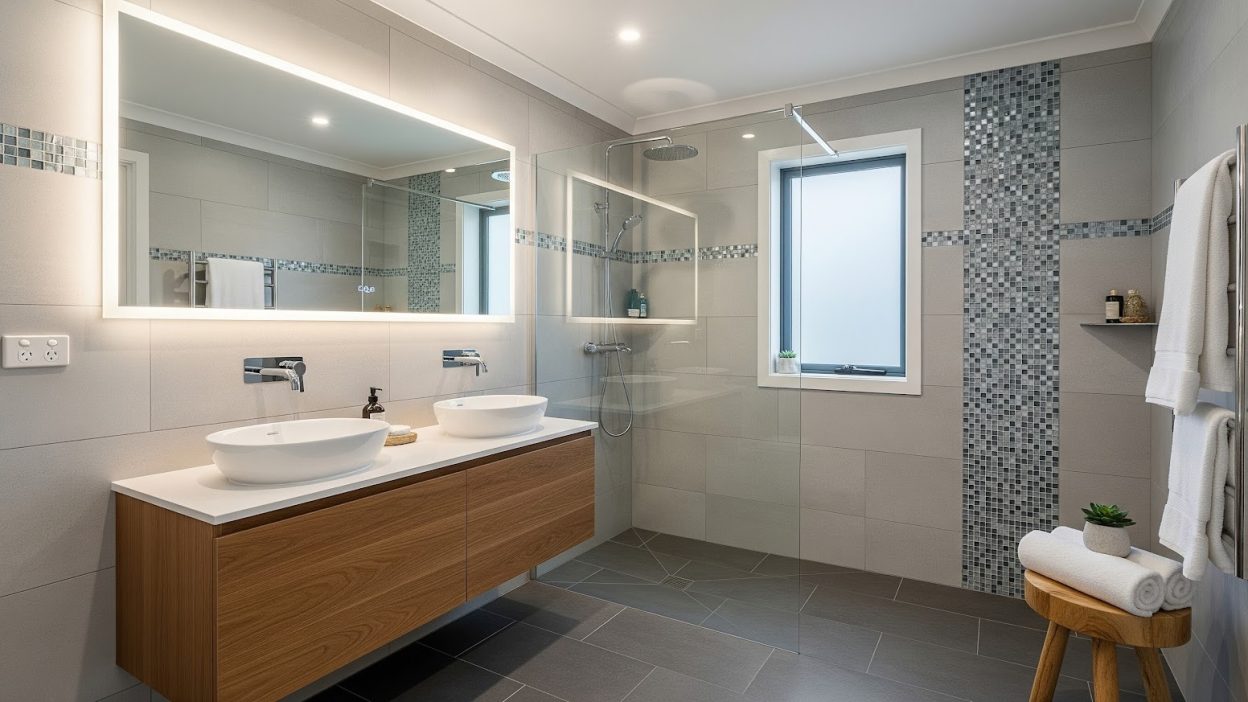
If you live in Cincinnati, you already know what summer feels like. The humidity settles in, the air feels thick, and every surface in your home seems to absorb moisture. Your bathroom takes the biggest hit. Steam from showers, splashing water around the sink, and warm air trapped behind closed doors create conditions where mold and mildew thrive. The good news is that a bathroom renovation gives you a rare opportunity to solve the problem from the inside out, not just treat the surface symptoms. Choosing the right mold resistant bathroom materials in Cincinnati, OH during your remodel can protect your home for years to come.
Whether you are replacing cracked tile, updating outdated finishes, or doing a full gut renovation, the materials and systems you put in place now will determine how your bathroom performs for the next decade. If you are planning a project, professional bathroom renovation services can help you select and install the right combination of materials from the start.
Why Cincinnati Bathrooms Are Especially Vulnerable to Mold
Cincinnati sits in a climate zone where summer humidity regularly climbs above 70 percent. The city experiences warm, wet summers that create sustained moisture exposure both inside and outside the home. When that humid outdoor air meets a warm bathroom environment, condensation forms on walls, ceilings, and grout lines. Over time, even small amounts of trapped moisture feed mold colonies that spread behind tile, inside wall cavities, and along ceiling joists.
Mold is not just an aesthetic problem. Exposure to household mold has been linked to respiratory irritation, allergic reactions, and worsening asthma symptoms, according to the Centers for Disease Control and Prevention. Addressing the source of moisture during a renovation is far more effective than cleaning mold off surfaces after it has already taken hold.
Signs of Hidden Mold Before Demo Begins
One of the most important steps in any bathroom renovation is what happens before the first tile comes off the wall. Hidden mold behind existing tile or drywall is extremely common, especially in older homes or bathrooms that have dealt with slow leaks or poor ventilation for years. Ignoring it and simply tiling over the problem does not fix anything. It just delays a more expensive repair.
Ask your contractor to inspect for the following warning signs before demolition begins:
Musty odors with no visible source. If the bathroom smells like mildew even after cleaning, mold is almost certainly growing somewhere you cannot see it.
Soft or spongy drywall. Press gently on the wall around the tub or shower surround. If it gives way or feels soft, water has penetrated behind the surface layer.
Grout discoloration or recurring tile stains. Grout that turns dark gray or black repeatedly, even after cleaning, suggests moisture is migrating from behind the tile.
Peeling paint or bubbling near the floor. Water wicks upward through walls. Paint lifting at the base of a wall is often a sign of a slow leak or water intrusion at the subfloor level.
Rust stains around screws or fixtures. Fasteners that have rusted visible through finished surfaces suggest prolonged moisture exposure inside the wall assembly.
Before any new materials go in, a thorough inspection and, if needed, remediation of existing mold is essential. The Environmental Protection Agency recommends identifying and correcting the moisture source before beginning any mold remediation work.
The Best Mold-Resistant Materials for Walls
Mold-Rated Drywall
Standard drywall is one of the worst possible choices for bathroom walls. The paper facing absorbs moisture and becomes a feeding ground for mold within days of prolonged water exposure. Mold-resistant drywall, sometimes marketed as moisture-resistant or green board, uses a fiberglass mat facing instead of paper, which resists moisture absorption and inhibits mold growth.
For areas directly adjacent to a shower or tub, cement board or fiber-cement backer board is an even stronger option. These products contain no organic material, which means mold has nothing to feed on. Brands like Durock and HardieBacker are widely used by contractors and are specifically designed to serve as a substrate for tile in wet areas.
Porcelain Tile
Porcelain tile is one of the most mold-resistant wall materials available. It is fired at extremely high temperatures, making it nearly impervious to water. Unlike ceramic tile, porcelain has a very low porosity rating, which means moisture cannot seep into the tile body. For shower surrounds, full-height tile installation eliminates the need for painted drywall in splash zones altogether.
The key to porcelain’s mold resistance is not just the tile itself but the grout and installation method. Epoxy grout is significantly more mold-resistant than cement-based grout. It is non-porous, chemical-resistant, and does not require sealing. While it costs more and requires skilled installation, epoxy grout in a shower can last for many years without discoloration.
Mildew-Resistant Paint
For walls outside the direct wet zone, mildew-resistant paint is an important final layer of protection. These paints contain antimicrobial additives that inhibit the growth of mold and mildew on the paint film. They are rated for high-humidity environments and are specifically formulated for bathrooms and kitchens.
Look for paints that list mildewcide as an active ingredient on the label. Flat finishes absorb more moisture than satin or semi-gloss finishes, so using a satin or eggshell sheen in a bathroom will provide better long-term performance in addition to being easier to clean.
Mold-Resistant Flooring Options
Porcelain Tile Flooring
The same properties that make porcelain tile excellent for walls apply to floors. Porcelain floor tile is durable, easy to clean, and does not absorb moisture. For bathrooms, large-format tiles with fewer grout lines reduce the total surface area where mold can take hold.
Luxury Vinyl Plank
Luxury vinyl plank (LVP) flooring has become one of the most popular choices for bathroom renovations in recent years, and for good reason. Modern LVP is 100 percent waterproof through its entire thickness. Unlike laminate flooring, which has a wood-fiber core that can swell and grow mold when exposed to water, quality LVP products use a stone-plastic composite (SPC) or WPC core that is completely impervious to moisture.
LVP is also softer underfoot than tile, warmer in cold months, and significantly less expensive to install. For homeowners who want a wood-look floor in the bathroom, LVP is the safest long-term choice from a moisture management standpoint. According to Floor Critics, SPC vinyl is among the top-rated waterproof flooring options for wet areas.
Mold-Resistant Ceiling Materials
Bathroom ceilings are often overlooked during renovation planning, but they accumulate moisture just as readily as walls. Steam rises, condenses on cooler ceiling surfaces, and sits there. Painted drywall ceilings are particularly vulnerable.
Options for mold-resistant bathroom ceilings include:
Moisture-resistant drywall with mildew-resistant paint. At minimum, use moisture-rated drywall on the ceiling and apply two coats of mildew-resistant paint in a semi-gloss finish.
PVC ceiling panels. Rigid PVC panels are completely waterproof, lightweight, and available in a variety of finishes including tile and shiplap patterns. They can be installed directly over existing ceilings in many cases, and they will not rot, warp, or support mold growth.
Cement board with tile. For a steam shower or high-end renovation, tiling the ceiling using cement board as a substrate is the most durable and mold-resistant approach available.
How Exhaust Fan Sizing and Placement Prevent Mold
Choosing the right materials matters enormously, but they cannot do the full job on their own. Moisture that is not removed from the bathroom air will eventually find a surface to condense on, regardless of what that surface is made of. A properly sized and positioned exhaust fan is the single most effective tool for preventing mold growth in any bathroom.
Calculating the Right CFM
Exhaust fans are rated in cubic feet per minute (CFM), which measures how much air the fan can move. The standard rule of thumb from the Home Ventilating Institute is one CFM per square foot of bathroom floor area. A 60-square-foot bathroom needs at least a 60 CFM fan. However, if the bathroom has a separate toilet enclosure, a jetted tub, or a steam shower, the required CFM should be higher.
For larger bathrooms or those with high ceilings, calculate the volume of the room rather than just the floor area. Multiply length by width by ceiling height to get cubic feet, then divide by 7.5 to determine the minimum CFM rating needed to achieve eight air changes per hour.
Fan Placement During a Remodel
A renovation is the ideal time to reposition the exhaust fan, because the walls and ceiling are already open. The fan should be placed as close to the primary moisture source as possible, which in most cases means directly above or adjacent to the shower. Mounting the fan near the door or on the opposite side of the bathroom from the shower allows humid air to linger over the wet area longer before being exhausted.
If the bathroom has both a shower and a freestanding tub, consider installing two fans: one near each fixture. Combining exhaust fan placement with proper material choices is the most reliable strategy for eliminating the conditions that mold needs to grow.
Bringing It All Together for Your Renovation
A bathroom renovation that addresses moisture at every layer, from the substrate and framing through the finished surfaces and ventilation system, will dramatically outperform a surface-level update. Replacing tile over the same old paper-faced drywall with the same undersized exhaust fan will produce the same mold problems within a few years. Doing the job right means making decisions about materials before the walls close back up.
The combination of cement board or moisture-resistant drywall, porcelain tile or LVP flooring, mildew-resistant paint, and a properly sized exhaust fan creates a system where no single point of failure can allow mold to take hold. In a city like Cincinnati, where summer humidity is a given rather than an exception, that system pays for itself.
Wrapping Up: Build Moisture Resistance Into Every Layer
Mold in bathrooms is not inevitable. It is the predictable result of the wrong materials, inadequate ventilation, and deferred maintenance working together over time. A renovation is your opportunity to reset all three of those factors at once. By selecting mold-resistant materials at every surface, addressing hidden mold before it gets covered up, and sizing your exhaust fan to match your bathroom’s actual volume, you can create a space that stays clean and dry for many years.
If you are planning a bathroom renovation in the Cincinnati area and want guidance on material selection, ventilation design, and moisture management, connecting with a local contractor who specializes in these systems is the most reliable path forward. You can also find local bathroom renovation professionals near you to discuss your specific project needs.
Frequently Asked Questions
Q: What is the most mold-resistant material for a shower surround?
A: Porcelain tile installed over cement board with epoxy grout is the most mold-resistant option for a shower surround. Porcelain is nearly non-porous, cement board contains no organic material for mold to feed on, and epoxy grout does not require sealing and resists discoloration over time.
Q: Is mold-resistant drywall enough for a bathroom renovation?
A: Mold-resistant drywall is a significant improvement over standard drywall, but it should be paired with other protective measures. In areas directly exposed to water spray, cement board is a better substrate. Mold-resistant drywall is best suited for walls outside the wet zone, such as areas near the vanity or toilet.
Q: How do I know if my exhaust fan is big enough?
A: The general rule is one CFM per square foot of floor area. A 50-square-foot bathroom needs at least a 50 CFM fan. For bathrooms with high ceilings or steam showers, calculate the room’s cubic footage and divide by 7.5 to find the CFM needed for eight air changes per hour.
Q: Can luxury vinyl plank flooring really be used in a bathroom?
A: Yes. High-quality luxury vinyl plank with a stone-plastic composite (SPC) core is 100 percent waterproof through its entire thickness and is an excellent choice for bathroom floors. It is warmer and softer underfoot than tile, resistant to moisture, and available in a wide range of styles and finishes.
Q: What are the warning signs that there is mold behind my bathroom tile?
A: Common signs include a persistent musty odor even after cleaning, soft or spongy wall areas behind the tile, grout that repeatedly turns dark even after treatment, paint peeling near the floor, or visible rust around wall fasteners. If any of these signs are present, a contractor should inspect the wall assembly before new materials are installed.
Q: How long does mold-resistant paint last in a bathroom?
A: Mildew-resistant paint in a bathroom typically lasts five to ten years with proper ventilation. Using a satin or semi-gloss finish will extend the life of the paint compared to flat finishes, and pairing the paint with an adequately sized exhaust fan will reduce the humidity load the paint has to manage.