Ultrasonic jewelry cleaners have become a popular tool for keeping rings, bracelets, and necklaces sparkling between professional visits. But the question many people overlook before pressing the start button is: can ultrasonic cleaner damage jewelry in [your city]? The short answer is yes, it absolutely can, depending on the gemstones, metals, and treatments involved. Before you drop your favorite pair of pearl earrings or emerald ring into that vibrating tank, it pays to understand exactly what these machines do and which pieces they should never touch. For pieces that need careful attention, a professional jewelry cleaning service is always the safer path.
How Ultrasonic Cleaners Actually Work
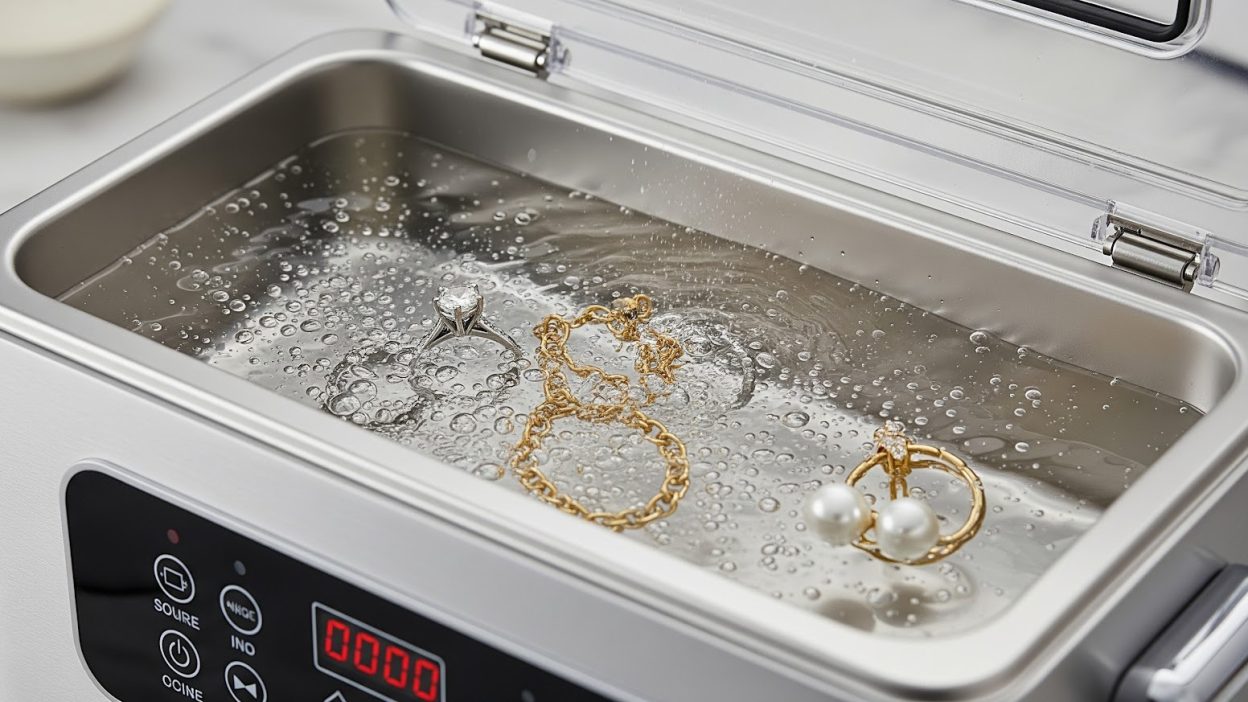
Ultrasonic cleaners use high-frequency sound waves, typically between 20,000 and 400,000 Hz, to create millions of microscopic bubbles in a liquid solution. This process, known as cavitation, causes those bubbles to implode rapidly against the surface of your jewelry, blasting away dirt, oils, and buildup from hard-to-reach crevices.
The technology is genuinely impressive. It removes grime that a soft cloth or even a toothbrush simply cannot reach. Professional jewelers have relied on ultrasonic machines for decades, and consumer versions have become affordable enough for home use.
But therein lies the problem. The same aggressive cavitation energy that strips away dirt can also fracture a gemstone along an existing inclusion, strip a surface coating from a treated stone, or draw out the moisture from an organic gem that depends on hydration to maintain its luster and structural integrity.
Gemstones That Should Never Go in an Ultrasonic Cleaner
Understanding which stones are vulnerable is the most important step in safe jewelry care. The following gemstones carry significant risk when exposed to ultrasonic vibration.
Pearls (Natural and Cultured)
Pearls are organic gems formed by living mollusks, and their beauty depends on a delicate outer layer called nacre. Ultrasonic vibration can erode nacre, cause surface pitting, and even dissolve the adhesive bonding a pearl to its setting. Beyond the gem itself, the vibrations can penetrate the drill holes in pearl strands and weaken the silk or nylon threading. Even a single session in an ultrasonic machine can visibly dull a pearl’s luster.
Opals
Opals contain a significant percentage of water within their silica structure, which is exactly what gives them their famous play of color. Ultrasonic cleaners remove moisture, and a dehydrated opal becomes brittle and prone to cracking. This process is sometimes called crazing, and once it happens, the damage is permanent. Opals are among the most fragile stones in jewelry, and ultrasonic cleaning is never appropriate for them.
Emeralds
Most emeralds on the market today have been fracture-filled with cedar oil, resin, or other substances to improve their clarity and appearance. This is a widely accepted industry practice, but it makes emeralds extremely vulnerable to ultrasonic cleaning. The vibrations and heat from the solution can force that filler out of the fractures, leaving a cloudier and less valuable stone. Even untreated emeralds are risky because of their natural inclusions, which can act as stress points under cavitation pressure.
Other At-Risk Stones
Several other gemstones warrant serious caution. Tanzanite is a relatively soft stone prone to thermal shock. Turquoise is porous and can absorb cleaning solutions, leading to discoloration. Malachite and coral are similarly porous. Alexandrite, while durable, is often enhanced and benefits from gentle hand cleaning instead. Any stone that has been dyed, coated, or heat-treated carries added risk because the treatment layer may not withstand the ultrasonic process.
According to the Gemological Institute of America, many treated and organic gems require specific care instructions that differ from standard cleaning methods, and ultrasonic cleaning is frequently cited as a procedure to avoid for these materials.
Gemstones That Are Generally Safe for Ultrasonic Cleaning
Not all gems are fragile. Several hard, untreated stones handle ultrasonic cleaning well under the right conditions.
Diamonds are the hardest natural substance and generally tolerate ultrasonic cleaning, though even diamonds can crack if they have significant inclusions or fractures. Sapphires and rubies that are unheated and untreated are also considered safe. Amethyst, topaz, and aquamarine can typically be cleaned ultrasonically when they are free of fractures or coatings.
The key qualifier throughout this list is “untreated.” Many stones sold in retail jewelry are routinely enhanced, and buyers are not always informed of these treatments at the point of sale. When in doubt, assume a stone has been treated and clean it by hand.
How Professional Jewelers Use Ultrasonic Machines Differently
There is a meaningful gap between a consumer ultrasonic cleaner and the equipment and expertise found in a professional jewelry workshop. Professional jewelers do not simply fill a tank and drop in a piece.
Frequency Adjustment
Commercial ultrasonic units allow jewelers to dial in the frequency based on the item being cleaned. Lower frequencies produce larger, more aggressive cavitation bubbles suited to heavy cleaning tasks on durable metals. Higher frequencies generate smaller, gentler bubbles appropriate for more delicate settings. Consumer machines typically operate at a fixed frequency with no adjustment capability.
Solution Selection
Professional jewelers use cleaning solutions formulated specifically for different metal and stone combinations. Some solutions are ammonia-based and work well on diamonds set in gold. Others are gentler, enzyme-based formulas suited to pieces with mixed materials. Using the wrong solution can accelerate tarnishing on silver, strip rhodium plating from white gold, or react poorly with porous stones. Consumer products typically offer a single all-purpose solution that may not be optimized for specific pieces.
Timing and Temperature Control
Most professional machines offer precise control over cleaning duration and solution temperature. Many delicate cleaning jobs require only 30 to 60 seconds at low heat. Leaving a piece in too long, even a durable one, increases the risk of loosening prong settings or weakening the bond of glued components. Home machines often run fixed cycles without these controls.
Visual Inspection Before and After
A professional jeweler examines each piece under magnification before cleaning to assess prong tightness, existing fractures, and any treatments. After cleaning, the piece is inspected again. This step alone prevents a significant number of cleaning-related incidents that home users would never anticipate.
The American Gem Society recommends consulting a certified jeweler before attempting any at-home cleaning on fine jewelry, particularly for pieces containing gemstones.
Safe At-Home Cleaning Methods by Metal Type
For the pieces that do not require professional attention, gentle at-home cleaning can maintain their appearance between visits. The method should match the metal and any stones present.
Gold (Yellow, Rose, and White)
A simple solution of warm water and a few drops of mild dish soap works well for plain gold jewelry and gold set with hard, untreated stones like diamonds or sapphires. Soak the piece for five to ten minutes, then use a soft-bristled toothbrush to gently scrub around settings and underneath stones. Rinse thoroughly and pat dry with a lint-free cloth. Avoid hot water, which can loosen prong settings over time.
White gold is often coated with rhodium for brightness. Harsh cleaners or abrasive brushing can wear away that coating, so gentler handling and less frequent cleaning are advised.
Sterling Silver
Silver tarnishes through oxidation, and while ultrasonic cleaning can remove tarnish from simple silver pieces, a polishing cloth is often safer and just as effective. For more detailed pieces, the warm water and dish soap method works, followed by buffing with a silver polishing cloth. Commercial silver dips are effective but should never be used on silver jewelry set with soft or porous stones, as the chemicals can damage them instantly.
Platinum
Platinum is dense and durable and handles cleaning well. The warm water and dish soap soak with a soft brush is appropriate for most platinum pieces. Platinum does not tarnish but can develop a patina over time. Many platinum owners prefer this natural finish, while others prefer to have their jeweler restore the original polish periodically.
Final Thoughts on Protecting Your Jewelry
Cleaning Your Jewelry Safely Is About Knowing What You Have
Ultrasonic cleaners are a valuable tool in the right hands with the right materials. They are not a universal solution, and treating them as one is one of the most common ways people accidentally damage their most cherished pieces. The difference between a sparkling diamond ring and a cracked emerald comes down to knowing which stones you own, whether they have been treated, and what cleaning approach is actually appropriate.
When there is any doubt, the safest option is always to skip the machine and visit a professional. A certified jeweler can assess your pieces, identify any treatments or vulnerabilities, and clean each item in a way that preserves both its appearance and its value. You can find local professional cleaning options by checking jewelry cleaning services near you to locate qualified jewelers in your area.
Routine care at home using gentle methods, combined with periodic professional cleaning, is the approach that protects your jewelry for years and generations to come.
Frequently Asked Questions
1. Can ultrasonic cleaner damage jewelry with diamonds?
Diamonds are generally safe for ultrasonic cleaning because of their exceptional hardness. However, diamonds with significant fractures, inclusions, or fracture-filling treatments can be at risk. Cavitation pressure may widen existing fractures or dislodge filling material. Always have your diamond inspected before cleaning ultrasonically.
2. How often should fine jewelry be professionally cleaned?
Most jewelers recommend professional cleaning once or twice a year. This also provides an opportunity to check prong tightness, look for early signs of wear, and address any issues before they become costly repairs.
3. Is it safe to use an ultrasonic cleaner on gold rings with gemstones?
It depends entirely on the gemstones involved. Plain gold set with untreated diamonds, sapphires, or rubies is typically safe. Gold rings containing emeralds, pearls, opals, turquoise, or any treated stones should not be placed in an ultrasonic cleaner.
4. What is the safest way to clean pearl jewelry at home?
Pearls should be wiped gently with a soft, damp cloth after each wear. Never use ultrasonic cleaners, steam cleaners, or submerge pearls in water for any length of time. Avoid commercial jewelry cleaners, which can damage nacre and weaken the string of pearl strands.
5. Can ultrasonic cleaning loosen stones in their settings?
Yes. Prolonged or repeated ultrasonic cleaning can loosen prongs and settings, especially in older pieces or those with worn metalwork. This is one reason professional jewelers inspect settings before and after cleaning. If prongs are already weakened, the vibrations can cause a stone to fall out of its setting.
6. Are there gemstones that look safe but are actually at risk?
Yes. Tanzanite looks like a durable purple stone but is surprisingly prone to thermal shock and surface damage. Surface-enhanced stones and doublets, which are composite stones made of two layers bonded together, can delaminate in an ultrasonic cleaner even though they look solid. When buying gemstone jewelry, always ask about treatments so you can care for the piece appropriately.