Most homeowners in Blue Ash, Ohio give little thought to their siding until something goes visibly wrong. But by the time a problem becomes obvious, damage behind the walls may have already spread. Knowing the siding repair signs in Blue Ash early can save thousands of dollars and protect your home from structural issues that develop silently over months. If you have noticed anything unusual about your home’s exterior, scheduling a siding repair in Blue Ash sooner rather than later is always the smarter move.
This guide helps homeowners understand what siding actually does, how to spot trouble before it escalates, and when to call a professional.
What Siding Actually Does for Your Home
Siding is more than a cosmetic feature. It serves three critical functions that keep your home safe, comfortable, and energy efficient.Thermal Barrier: Siding works alongside insulation to slow heat transfer between the interior and exterior. When siding develops gaps, cracks, or warps, conditioned air escapes and outdoor temperatures push inside, forcing your HVAC system to work harder and driving up energy bills.
Moisture Shield: One of siding’s most important jobs is redirecting rain, snow, and humidity away from the sheathing and structural framing underneath. When siding fails, water finds a path behind the panels and into the wall cavity. Once moisture reaches wood framing, rot and mold can take hold within weeks.
Structural Protector: Siding ties together the outer envelope of your home, adding a layer of rigidity and protection against wind, debris, and pests. Damaged or missing sections leave your home vulnerable to all three.
Understanding these functions makes it easier to recognize why even minor siding damage deserves prompt attention.
Six Red Flags You Can Spot from the Curb
You do not need a contractor to identify early signs of siding trouble. A careful walkthrough around your home’s exterior can reveal most common warning signs.
1. Warping or Buckling Panels
Warped or buckled panels are one of the most visible signs of siding failure. This typically occurs when moisture gets trapped behind the siding or when panels were installed without adequate expansion gaps. In the Cincinnati area, dramatic temperature swings between winter cold and summer heat cause materials to expand and contract. Panels that cannot accommodate this movement begin to warp or bow outward, no longer sitting flush against the sheathing, and that gap becomes a direct entry point for water and insects.
2. Cracks, Gaps, and Holes
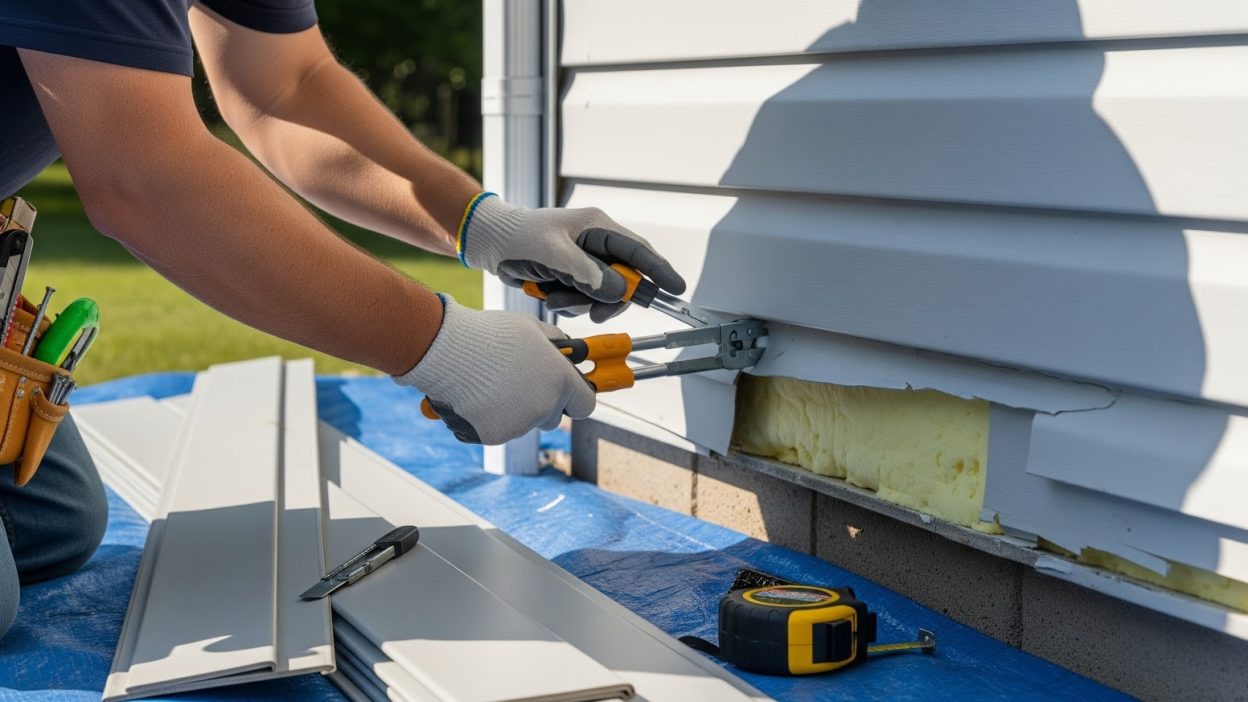
Even small cracks in siding panels are worth investigating. Cracks allow water to seep behind the siding during rain, and over repeated freeze-thaw cycles, those cracks expand. Gaps at seams or corners are equally concerning, serving as entry points for moisture, drafts, and pests like carpenter ants and wasps that nest inside wall cavities. According to the U.S. Department of Energy, air leaks through gaps in the building envelope are a major source of energy loss in residential homes.
3. Peeling Paint or Significant Fading
Paint on or near your siding that peels, blisters, or fades unevenly is often a symptom of moisture escaping from inside the wall rather than a painting problem. When humidity from inside the house pushes outward through damaged siding, it disrupts the paint film and causes it to lift or bubble. If you are repainting the same area repeatedly without addressing the root cause, water infiltration is likely involved.
4. Loose or Missing Sections
Loose panels clatter in the wind and signal that fasteners have corroded, wood nailers have rotted, or the panel has degraded beyond its useful life. Missing sections are more urgent. Even a small uncovered area exposes the house wrap or sheathing to direct weather. In Blue Ash, where spring storms and strong winds are common, loose siding can become a safety hazard if a panel detaches entirely.
5. Rising Energy Bills Without Explanation
If your heating and cooling costs have climbed steadily without any clear reason, deteriorating siding may be contributing. As panels warp, crack, or separate at joints, the thermal envelope of your home is compromised. The Environmental Protection Agency’s ENERGY STAR program notes that sealing the building envelope, including the exterior cladding, can reduce energy bills meaningfully in older homes.
6. Visible Mold, Mildew, or Rot at Seams
Mold or mildew appearing at seams between panels, along bottom edges, or around windows and doors is a clear sign that moisture is being trapped. Surface mold can sometimes be cleaned, but if the substrate underneath has begun to rot, the structural integrity of the wall system is at risk. Soft spots or discoloration at the base of siding panels near the foundation often indicate that water has been soaking into the sheathing for a long time.
Vinyl vs. Fiber Cement vs. Aluminum: Which Holds Up Best in Cincinnati’s Climate?
The greater Cincinnati area, including Blue Ash, presents a challenging environment for exterior materials. The region experiences high summer humidity, sub-freezing winter temperatures, ice storms, and periodic severe thunderstorms. Each siding material responds differently to these conditions.Vinyl Siding is the most common choice in the area due to its affordability and low maintenance. It resists moisture well and does not rot or corrode. However, vinyl becomes brittle in extreme cold and can crack during hailstorms or when impacted by debris. It also warps more readily in intense summer heat, particularly on south and west-facing walls. Quality matters significantly with vinyl; thicker panels from reputable manufacturers perform far better in temperature extremes.
Fiber Cement Siding is considered one of the most durable options for the Cincinnati climate. It handles humidity well, resists pests, and does not warp or crack as readily as vinyl. Fiber cement is also fire resistant and holds paint longer than wood-based products. The tradeoff is higher upfront cost and periodic repainting every 10 to 15 years. The James Hardie technical documentation outlines how fiber cement products are engineered for specific climate zones, including the humid continental conditions found in Ohio.
Aluminum Siding was widely installed on homes built between the 1940s and 1980s, and many Blue Ash homes still have it. Aluminum does not rot and holds up reasonably well against moisture. Its main weaknesses are denting from hail, chalking over time as the oxidized surface dulls, and difficulty finding matching replacement panels. Homes with original aluminum siding that has not been maintained may benefit from a full replacement rather than ongoing patching.
Storm Damage vs. Age-Related Wear: When to File a Claim vs. Schedule a Repair
Understanding whether damage is storm-related or the result of gradual wear affects both how you proceed and whether your homeowner’s insurance applies.
Storm Damage occurs suddenly as a direct result of a specific weather event such as a hailstorm, high winds, or falling branches. This type of damage is typically covered under standard homeowner’s insurance policies. Signs of storm damage include impact marks consistent with hail, sections torn away by wind, and damage patterns concentrated on one side of the house facing the storm. After any significant storm in Blue Ash, document any damage with photographs before scheduling a professional assessment. Most insurance carriers require claims be filed within a specific window after the event.
Age-Related Wear is gradual deterioration caused by years of exposure to weather, UV radiation, temperature cycling, and normal settling of the structure. This includes fading, cracking from freeze-thaw cycles, and panels that have reached the end of their useful lifespan. Insurance policies generally do not cover wear and tear, so repairs stemming from age are a maintenance expense.
The distinction is not always straightforward. A storm may accelerate existing wear, and an adjuster may dispute whether damage was pre-existing. Having a professional inspection documented before and after storm season can help establish a clear baseline.
Final Thoughts: Act Before the Damage Reaches the Sheathing
The most important takeaway for Blue Ash homeowners is that siding problems rarely stay contained. What starts as a small crack or a single loose panel can allow water into the wall cavity, where it damages insulation, feeds mold, and rots framing before you see any sign from the outside. By the time the sheathing is compromised, a simple siding repair has often grown into a far more expensive project.
Routine visual inspections, especially after major storms and at the start of each season, give you the best chance of catching problems early. If you notice any of the six warning signs described above, do not wait to investigate further.
You can also find local siding professionals on Google Maps to compare options and read reviews from other Blue Ash homeowners who have dealt with similar issues.
Frequently Asked Questions
Q1: How often should I inspect my siding in Blue Ash? A visual inspection twice a year is a reasonable baseline, typically in spring after winter weather ends and in fall before temperatures drop. After any significant storm involving high winds or hail, a prompt inspection is also advisable. Pay particular attention to seams, areas around windows and doors, and the base of the siding near the foundation.
Q2: Can I repair a few damaged siding panels without replacing the whole exterior? In many cases, yes. Localized damage can often be repaired without disturbing the rest of the exterior, as long as the underlying sheathing and house wrap are still in good condition. A professional inspection will confirm whether damage is truly isolated or whether there is more extensive deterioration behind the visible surface.
Q3: What is the average lifespan of different siding materials in Ohio? Vinyl siding typically lasts 20 to 40 years depending on quality and maintenance. Fiber cement can last 50 years or more with proper repainting. Aluminum siding has a similar lifespan but may show cosmetic deterioration sooner. Wood siding can last decades when properly maintained but requires the most upkeep in Cincinnati’s humid climate.
Q4: Does damaged siding always mean there is damage to the wall behind it? Not always, but the risk increases the longer damaged siding goes unrepaired. Surface cracks caught early may not have allowed enough moisture penetration to affect the sheathing. However, widespread warping, long-standing gaps at seams, or visible mold at panel edges are more likely to indicate that moisture has already reached layers behind the siding.
Q5: How do I know if my siding damage qualifies for an insurance claim? Insurance coverage typically applies to sudden damage from a specific event such as a storm, hail, or falling tree limb. Gradual wear and tear is generally not covered. After a storm, document the damage with dated photographs and contact your carrier promptly. A licensed contractor can provide a written assessment clarifying whether the damage pattern is consistent with storm impact.