
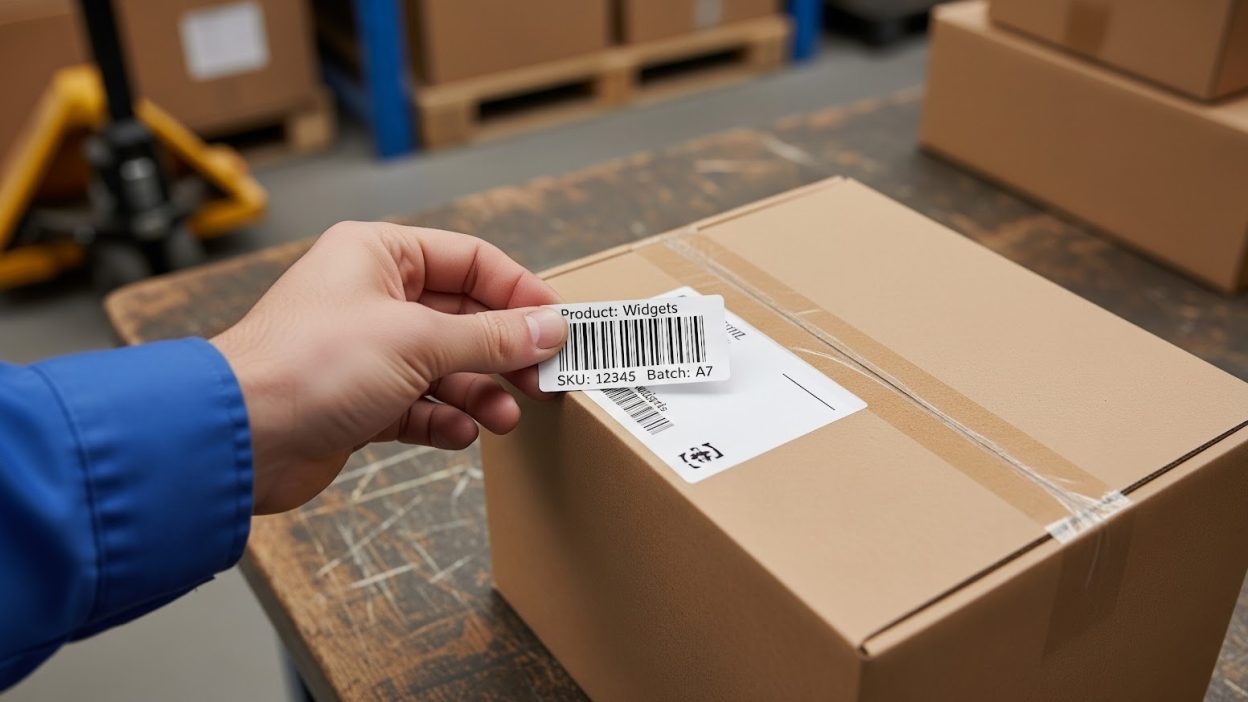
Operations managers across industries spend thousands of dollars every year on label printing infrastructure, only to discover later that they chose the wrong technology for their specific environment. The debate around thermal transfer vs. direct thermal labels in industrial and logistics settings is one of the most misunderstood topics in supply chain management. If you rely on barcode labeling solutions to keep your warehouse, distribution center, or manufacturing floor running smoothly, understanding these two printing methods is not optional. It is essential for cost control, compliance, and scan reliability.
This guide breaks down how each method works, when to use one over the other, and how to evaluate your operation before making a purchasing decision.
How Each Printing Method Works
Direct Thermal Printing
Direct thermal printing uses heat-sensitive paper or label stock that darkens when it passes over a heated printhead. There is no ribbon, no ink, and no toner involved. The printhead applies heat directly to the label surface, causing a chemical reaction that produces the printed image.
Because there are fewer consumables involved, direct thermal printers typically have lower upfront costs and simpler maintenance requirements. You are not buying ribbon rolls alongside label stock, which simplifies your supply chain and reduces per-label cost in the short term.
However, this convenience comes with a significant tradeoff. The same chemical coating that makes direct thermal labels easy to print also makes them vulnerable to environmental exposure. Heat, UV light, and certain solvents can cause the label to darken prematurely or fade entirely, making barcodes unreadable. According to Brady Corporation’s labeling resource center, direct thermal labels are generally rated for six months to two years under controlled conditions, making them unsuitable for applications that demand long-term legibility.
Thermal Transfer Printing
Thermal transfer printing uses a ribbon coated with wax, wax-resin, or full-resin ink. The printhead heats the ribbon, which transfers ink onto the label surface. The image is bonded to the label material rather than chemically activated within it.
This process produces labels that are significantly more durable. Depending on the ribbon and label material combination you choose, thermal transfer labels can remain scannable for five to ten years or more, even in harsh environments involving moisture, extreme temperatures, UV exposure, and chemical contact.
The cost model for thermal transfer printing is different. You will pay for both label stock and ribbon rolls as ongoing consumables. Initial printer hardware may also cost more. But when you spread these costs over the extended lifespan of each label and factor in the cost of failed scans, reprints, and compliance failures, thermal transfer often delivers a lower total cost of ownership for long-term applications.
Direct Thermal vs. Thermal Transfer: A Cost Comparison Over Time
Choosing purely on upfront cost is one of the most common mistakes operations managers make. Here is a realistic way to think about the financial implications of each method.
For a high-volume shipping operation producing 5,000 labels per day with a 90-day average label life, direct thermal is almost certainly the right economic choice. Labels are scanned quickly, packages move through the supply chain within weeks, and the environmental vulnerability of direct thermal stock is never an issue.
For a manufacturer that applies asset tags to equipment expected to remain in service for seven to ten years, the calculus is entirely different. A direct thermal label on a piece of outdoor machinery may become unreadable within a few months of UV and moisture exposure, requiring manual re-labeling at significant labor cost. A properly specified thermal transfer label on polyester or polypropylene stock with a resin ribbon could remain scannable for the full equipment lifecycle with no intervention required.
The Zebra Technologies printing guide and similar industry resources consistently recommend evaluating label life expectancy as the primary variable before selecting a printing method.
When to Use Direct Thermal Labels
Direct thermal is the right choice when label lifespan is short and environmental exposure is controlled. Common use cases include:
Shipping and logistics labels: E-commerce fulfillment centers, parcel carriers, and retail distribution operations produce enormous volumes of labels that only need to survive a few days or weeks in transit. Direct thermal handles this beautifully and keeps costs down.
Point-of-sale receipts: Most modern receipt printers use direct thermal technology. Receipts are temporary documents, and the lack of ribbon makes these printers virtually maintenance-free for high-volume retail environments.
Food and perishable labeling: Labels applied to refrigerated or frozen products that will be sold or consumed within days are excellent candidates for direct thermal. The short lifecycle means durability is not a concern.
Patient wristbands and medical records: Hospitals and clinics frequently use direct thermal wristband printers because the labels only need to remain readable for the duration of a patient’s visit or stay, which is typically measured in hours or days.
If your labels are used indoors, scanned quickly, and not exposed to harsh conditions, direct thermal is likely your most cost-effective option.
When to Use Thermal Transfer Labels
Thermal transfer is the correct choice whenever label longevity, environmental resistance, or regulatory compliance is a priority. Applications include:
Asset and inventory tracking: Equipment, tools, machinery, and infrastructure assets often carry labels for years. Thermal transfer labels on durable substrates maintain barcode integrity through repeated scanning, handling, and environmental exposure.
Outdoor and industrial environments: Labels exposed to sunlight, rain, chemicals, extreme heat, or cold require the kind of durability that only thermal transfer can provide. A resin ribbon on polyester stock can withstand conditions that would destroy a direct thermal label within weeks.
Compliance and regulatory labeling: Industries governed by standards from the FDA, GS1, or OSHA often require labels to remain legible for extended periods. Thermal transfer provides the consistency and lifespan necessary to meet these requirements without reprinting.
Chemical and laboratory labels: Labs using reagents, solvents, and cleaning agents need labels that will not dissolve, smear, or fade when exposed to those substances. Resin-ribbon thermal transfer labels are purpose-built for this environment.
Cold chain and freezer applications: While direct thermal labels can technically function in refrigerated environments, condensation and moisture over time degrade label adhesion and print quality. Thermal transfer labels on appropriate substrates perform far more reliably in cold storage.
How to Evaluate Your Operation Before Buying a Printer
Making the wrong choice at the printer selection stage can cost an organization far more than the hardware itself. Before committing to a technology, work through the following evaluation framework.
Define Your Label’s Expected Lifespan
How long does your label need to remain scannable? If the answer is measured in days or weeks, direct thermal is likely sufficient. If it is measured in months or years, thermal transfer is the safer investment.
Assess Environmental Exposure
Ask where your labels will live after they are printed. Will they be exposed to outdoor UV light? Moisture or submersion? Chemical solvents? High heat from engines or machinery? The more environmental stressors involved, the stronger the case for thermal transfer on a durable substrate such as polypropylene, polyester, or aluminum foil stock.
Evaluate Print Volume and Consumable Costs
High-volume operations printing thousands of labels per day need to run detailed cost-per-label calculations that include hardware amortization, label stock, and ribbon (if applicable). Direct thermal wins on simplicity at high volumes when lifespan requirements are short. Thermal transfer wins when longevity requirements would otherwise generate significant reprint and relabeling costs.
Consider Scan Reliability Requirements
In environments where a failed scan triggers a costly delay, such as automated conveyor systems, hospital medication administration, or manufacturing quality control checkpoints, label print quality and longevity directly impact operational efficiency. Thermal transfer labels tend to produce sharper, more consistent barcodes that perform reliably across a wider range of scanning conditions.
Match Ribbon Type to Substrate and Environment
If you select thermal transfer, the ribbon type matters as much as the label stock. Wax ribbons are economical and work well on paper stock in standard office or warehouse environments. Wax-resin ribbons offer improved resistance to smearing and moisture. Full resin ribbons paired with synthetic substrates provide the highest level of chemical, UV, and abrasion resistance and are the right choice for outdoor, industrial, or laboratory applications.
Resources like the GS1 labeling standards documentation can help operations that are required to meet specific industry barcode quality thresholds understand what print specifications are necessary for compliance.
Wrapping It All Up: Making the Right Choice for Your Labeling Operation
The choice between thermal transfer and direct thermal printing is not about which technology is superior. Both methods are mature, reliable, and widely deployed across industries worldwide. The decision is entirely about matching the right tool to the specific demands of your labeling environment.
Operations managers who take the time to define label lifespan requirements, evaluate environmental exposure, and calculate true total cost of ownership almost always arrive at a clear answer. Those who default to the cheapest upfront option without this analysis frequently find themselves managing costly reprints, compliance failures, and scan errors that far exceed any initial savings.
If your labels need to survive days, direct thermal is your friend. If they need to survive years, thermal transfer is your answer. And if you are unsure where your application falls, consult with a labeling specialist who can recommend the right combination of printer, ribbon, and substrate for your specific workflow.
You can also explore local labeling expertise and support by visiting this barcode labeling solutions provider to connect with professionals who understand the demands of industrial and commercial label printing.
Frequently Asked Questions
Q1: Can I use direct thermal labels in a freezer or cold storage environment?
Direct thermal labels can function in refrigerated environments in the short term, but prolonged exposure to condensation and moisture tends to degrade adhesion and print quality. For freezer applications where labels must remain readable for extended periods, thermal transfer labels on synthetic substrates with appropriate adhesive formulations are the recommended choice.
Q2: How long do thermal transfer labels actually last?
The lifespan of a thermal transfer label depends on the ribbon type and label substrate combination, as well as environmental conditions. In a controlled indoor environment, properly specified thermal transfer labels can last ten years or more. Outdoor applications with UV and moisture exposure benefit from resin ribbons on polyester or polypropylene stock, which can provide five to seven years of reliable performance in many conditions.
Q3: Is thermal transfer printing more expensive than direct thermal?
On a per-label basis, thermal transfer printing typically costs more because it requires both label stock and ribbon rolls as consumables. However, when you account for label lifespan and the cost of reprinting failed or degraded labels, thermal transfer often provides a lower total cost of ownership for applications requiring long-term readability. Direct thermal is more cost-effective for high-volume, short-lifespan applications like shipping labels and receipts.
Q4: What is the difference between wax, wax-resin, and resin ribbons?
Wax ribbons are the most economical option and work well for general-purpose printing on paper labels in standard indoor conditions. Wax-resin ribbons offer improved resistance to smearing, moisture, and moderate chemical exposure, making them suitable for a wider range of warehouse and light industrial environments. Full resin ribbons provide the highest level of durability and are designed for synthetic label materials used in outdoor, chemical, or extreme temperature applications.
Q5: How do I know if my current labels are failing due to the wrong print method?
Signs that your label technology may be mismatched to your environment include barcodes that fail to scan after a short period in service, labels that show fading, smearing, or yellowing before the intended end of their lifecycle, increased manual data entry due to scan failures, and labels that peel or lose adhesion in your specific environmental conditions. If you are experiencing any of these issues consistently, it is worth re-evaluating your label and ribbon specifications against the conditions your labels actually face in the field.