
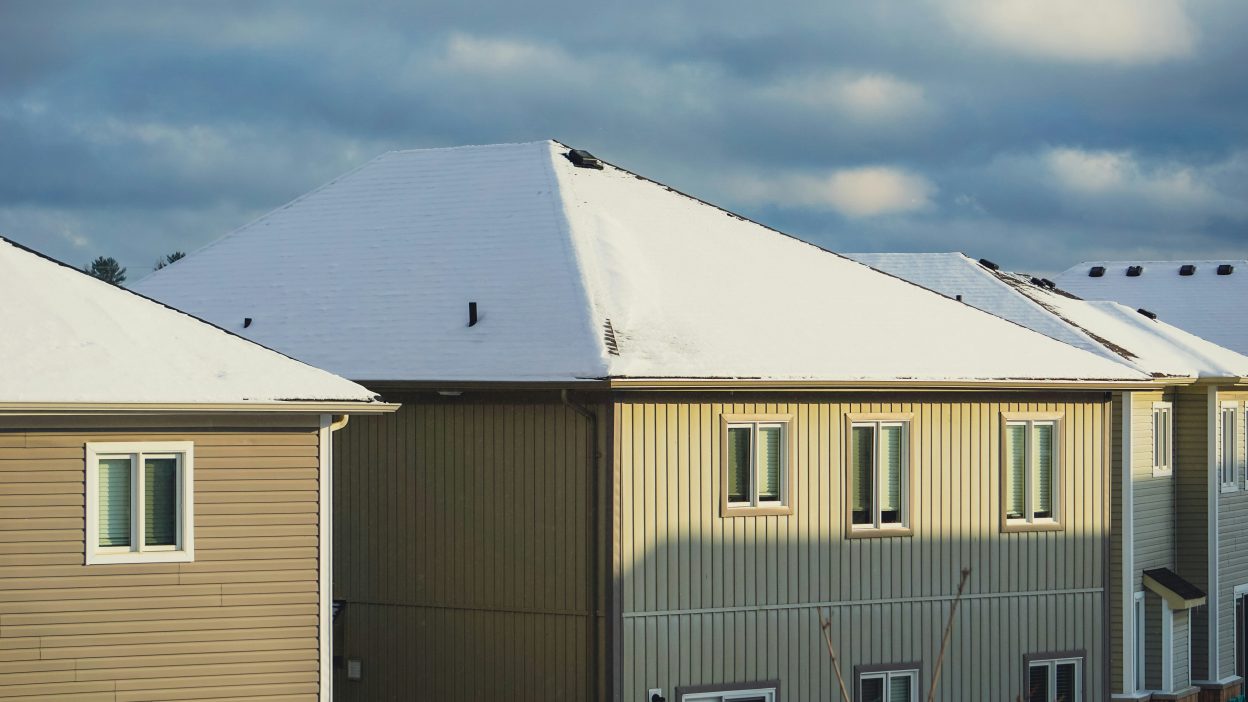
Every winter, homeowners across Central Ohio step outside to find long icicles dangling from their rooflines and thick ridges of ice pushing up under their shingles. The instinct is to blame the gutter guards installed the previous fall. But do gutter guards prevent ice dams in Columbus, OH, or is something else entirely to blame? Understanding what actually causes ice dams, and what role gutters play, is the first step toward protecting your home from costly winter damage. If you are dealing with recurring ice problems, investing in quality gutter installation in Columbus, OH is one piece of a larger solution, but it must be paired with the right knowledge.
What Is an Ice Dam and Why Does It Form?
An ice dam is a ridge of ice that builds up along the lower edge of a roof, typically at or just above the gutters. As the ice expands, it can force water backward under shingles, leading to roof leaks, rotted fascia boards, stained ceilings, and even mold growth inside the home.
The root cause of ice dams has very little to do with your gutters or gutter guards. Ice dams form because of uneven roof surface temperatures. Here is how the cycle works:
Warm air leaks from the living space into the attic. That heat warms the roof deck above, melting the snow on the upper portion of the roof. The snowmelt runs down toward the eaves, which are not heated by the attic because they extend beyond the exterior wall. When the meltwater hits the cold eave section, it refreezes. Over days and weeks, this process repeats, building up a thick dam of ice.
According to the University of Minnesota Extension, the primary driver of ice dams is heat loss from inadequate attic insulation and poor ventilation. The gutters themselves are largely bystanders in this process. They sit at the edge of the roof and collect whatever comes off the roof, whether that is rainwater, debris, or meltwater that is about to refreeze.
The Common Misconception About Gutter Guards and Ice
Many homeowners assume that because ice forms in or around gutters, clogged gutters must be the cause. This logic leads to the belief that installing gutter guards will eliminate ice dams entirely. While gutter guards are a valuable investment for year-round performance, they are not a cure for ice dams on their own.
Here is the distinction worth understanding. Clogged gutters can contribute to pooling water near the roofline, which may worsen freezing conditions or create additional weight. Gutter guards help by keeping debris out, which means water flows freely rather than backing up. But if the underlying issue, which is warm air escaping from your attic, is never addressed, ice dams will continue to form regardless of what type of gutters or guards you have installed.
The Insurance Institute for Business and Home Safety notes that ice dam prevention is fundamentally about controlling the temperature of the roof surface, which is achieved through proper insulation and ventilation in the attic space.
How Quality Gutter Guards Can Still Help
Even though gutter guards are not the primary solution to ice dams, they are far from useless during winter. Here is what they genuinely contribute:
Reducing debris buildup that worsens freezing. Leaves, twigs, and organic debris that collect in unprotected gutters absorb and retain moisture. In freezing temperatures, wet debris freezes solid, creating blockages that cause water to back up against the fascia and roofline. Quality gutter guards significantly reduce this buildup, meaning your gutters are more likely to drain properly even as temperatures fluctuate.
Maintaining drainage pathways. When gutters drain freely, meltwater from the roof has somewhere to go rather than pooling and refreezing. Gutter guards that allow water flow while blocking solids help maintain these drainage pathways through the winter months.
Preventing ice formation inside the gutter channel. A gutter packed with soggy leaves freezes into a solid block that can warp the gutter, pull it away from the fascia, or create overflow conditions. Guards reduce the debris load, which lowers the chance of this type of damage.
That said, no gutter guard on the market eliminates ice dam formation on its own. Homeowners who invest in guards should view them as part of a broader winter protection strategy, not a standalone fix.
The Real Fix: Attic Insulation and Ventilation
If you want to stop ice dams at the source, the attic is where the work needs to happen. Two factors are critical: insulation and ventilation.
Attic insulation acts as a thermal barrier between your warm living space and the roof deck. The U.S. Department of Energy recommends that homes in climate zones like Central Ohio should have attic insulation rated at R-49 to R-60. Many older Columbus homes fall well short of this, which is a primary reason ice dams recur each winter.
Attic ventilation works alongside insulation by circulating cold outside air through the attic space, keeping the entire roof deck at a uniformly cold temperature. Proper ventilation requires both intake vents at the soffits and exhaust vents at the ridge working together to create continuous airflow.
Before spending money on any roofing or gutter product, Columbus homeowners should have an energy audit or attic inspection performed. Addressing insulation and ventilation deficiencies will do more to prevent ice dams than almost any exterior upgrade.
Seasonal Gutter Maintenance Timeline for Central Ohio
Columbus sits in a climate zone that delivers real winters, with temperatures that regularly dip below freezing from December through February and unpredictable shoulder conditions in November and March. Following a seasonal maintenance calendar helps protect your gutters, fascia, foundation, and roof throughout the year.
Fall: October Through November
Fall is the most important season for gutter maintenance in Central Ohio. By mid-October, leaves from maples, oaks, and elms begin falling heavily. Gutters should be cleaned at least once after peak leaf fall, typically in late October or early November, and again in late November once most trees have shed their foliage.
During fall cleaning, inspect the gutters for sagging sections, loose fasteners, and separating joints. Check that downspouts are clear and extend at least four to six feet away from the foundation. If you have gutter guards, rinse them with a garden hose to confirm water is flowing through freely. This is also the right time to trim overhanging branches that could dump additional debris or cause damage during winter ice storms.
Winter: December Through February
During winter months, avoid chipping ice out of gutters with metal tools, as this can dent aluminum and damage protective coatings. A roof rake can remove snow from the lower few feet of the roof, reducing the meltwater that feeds ice dams. Calcium chloride ice melt placed in a nylon stocking and laid diagonally across a dam creates drainage channels. Avoid rock salt, which corrodes metal gutters and damages roofing materials.
Spring: March Through May
Once winter breaks, spring is the time for a thorough post-season inspection. Look for gutters that have pulled away from the fascia, a common sign of ice weight damage. Check fascia boards for soft spots or discoloration that could indicate water infiltration. Inspect the roof for lifted shingles and damaged flashing, and look for water staining on interior ceilings.
Clean out remaining winter debris, including granules washed from asphalt shingles that reduce drainage efficiency. Test all downspouts and extensions to confirm proper drainage away from the foundation, since spring rain in Columbus can be significant.
Bringing It All Together: A Whole-Home Approach
Ice dams are a systems problem. They are the visible symptom of a home losing heat through the attic in an uncontrolled way. Gutter guards help by keeping drainage channels clear and reducing debris-related freezing complications, but they are one layer of a solution that must also include attic insulation upgrades and proper ventilation.
For Columbus homeowners, the practical action plan starts with an attic inspection to evaluate insulation and ventilation. Address any deficiencies before the next winter season. Install quality gutter guards to reduce debris accumulation, follow the seasonal maintenance calendar, and address ice dams safely when they appear.
Final Thoughts on Ice Dams and Gutter Protection
Ice dams are one of the most misunderstood winter problems homeowners face. The icicles hanging from the roofline look like a gutter problem, but they are almost always a sign of what is happening inside the attic. Gutter guards are genuinely useful for reducing debris and maintaining drainage, but they are not designed to stop the heat transfer that drives ice dam formation.
The most effective protection combines attic improvements with quality gutters and consistent seasonal maintenance. Homeowners who understand this connection are better equipped to make smart investments that protect their roof, fascia, and foundation year after year.
For local guidance on gutter systems suited to Central Ohio winters, connect with gutter services in Columbus who understand the regional climate and can recommend appropriate solutions for your specific home.
Frequently Asked Questions
Q: Can gutter guards completely prevent ice dams? No. Gutter guards help reduce debris buildup and maintain drainage, but they cannot prevent ice dams. Ice dams are caused by heat escaping from the attic and warming the roof unevenly. Addressing insulation and ventilation in the attic is the most effective solution.
Q: Why do icicles form even when I have clean gutters? Icicles form when snow melts on a warm section of the roof and refreezes at the cold eave area. This is a function of attic heat loss, not gutter condition. Even perfectly clean, unobstructed gutters will produce icicles if the underlying temperature differential exists.
Q: How often should Columbus homeowners clean their gutters? Most Columbus homes need gutters cleaned at least twice per year: once in late October or early November after peak leaf fall, and once in late November to catch remaining debris. Homes with heavy tree coverage may need more frequent cleaning, and a spring inspection after winter is also recommended.
Q: Are some gutter guard types better for winter conditions? Micro-mesh gutter guards tend to perform well in cold climates because they allow water to pass through while blocking nearly all solid debris. The key factor is ensuring water can drain through or around the guard during freeze-thaw cycles.
Q: What is the fastest way to deal with an existing ice dam? Use a roof rake to remove snow from the lower portion of the roof to cut off the meltwater supply. Calcium chloride ice melt placed in a tube across the dam can create drainage channels. Avoid chipping at ice with metal tools, as this damages gutters and roofing materials.