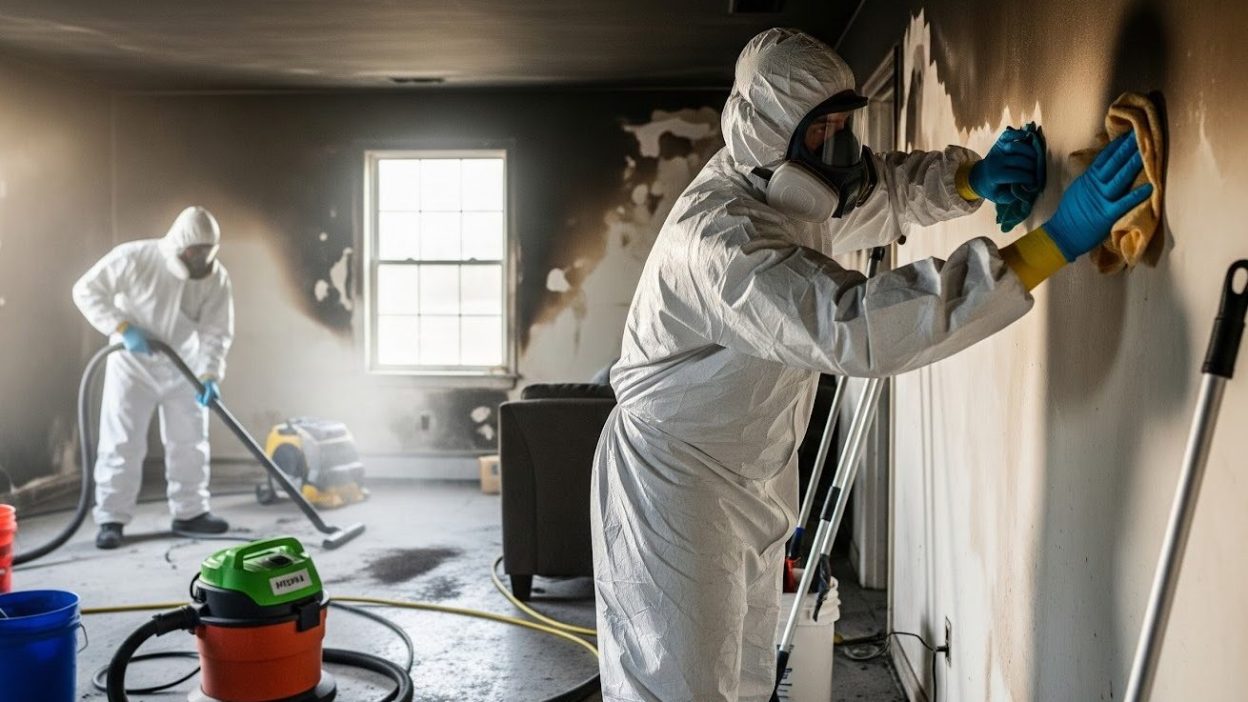
When a fire breaks out in your home, the flames themselves are often just the beginning of the destruction. Many homeowners dealing with a smoke damage vs fire damage insurance claim in Denver, CO quickly discover that the invisible aftermath, soot, smoke particles, and chemical residues, can be just as devastating as the fire itself. Yet because there are no visible flames, smoke and soot damage is routinely underestimated, leading to underfunded insurance claims, prolonged restoration timelines, and indoor air quality problems that can linger for months.
If you are navigating the aftermath of a house fire, understanding how soot and smoke removal works and how insurance adjusters evaluate these claims can be the difference between a full recovery and a settlement that leaves your home permanently compromised.
Why Smoke Damage Is More Destructive Than It Looks
Most people assume that once a fire is extinguished, the damage stops. In reality, the opposite is true for smoke. Soot and smoke residues continue to chemically react with surfaces for days, weeks, and even months after the fire is out.
Soot is not just ash. It is a byproduct of incomplete combustion, made up of carbon particles, acids, oils, and a complex mixture of volatile organic compounds (VOCs). According to the Environmental Protection Agency (EPA), fine particles from smoke can penetrate deep into building materials and the respiratory system alike. The acidic nature of soot is particularly destructive because it etches surfaces rather than simply coating them.
Here is what that means in practical terms for your home:
Soft furnishings and fabrics: Upholstery, curtains, and carpets absorb smoke odors at a molecular level. The acidic compounds in soot break down fabric fibers over time, causing discoloration and deterioration that worsens without treatment.
Paint and drywall: Soot acids stain and etch painted surfaces. Even after cleaning, acid residues can cause paint to yellow, peel, and blister. Drywall is porous, meaning smoke can penetrate beyond the surface layer entirely.
Plastics and electronics: Plastics are especially vulnerable because they off-gas during exposure to heat, creating a surface that absorbs soot chemicals readily. The same acids that damage fabric and paint corrode metal contacts and circuit boards inside electronics, often causing failures weeks after the fire event.
Wood and structural materials: Smoke infiltrates the grain of wood, and the oils and acids in soot react with the wood’s natural tannins, causing permanent staining if not treated promptly.
The longer soot sits, the more irreversible the damage becomes. This is why rapid, professional intervention is essential, and why documenting all affected areas before cleanup is critical for your insurance claim.
Wet Smoke Residue vs. Dry Smoke Residue: Why the Difference Matters
Not all smoke damage is the same. Restoration professionals classify smoke residue into two primary categories, and understanding the distinction is important both for effective cleanup and for supporting your insurance claim.
Dry Smoke Residue
Dry smoke residue results from fast-burning, high-temperature fires fueled by materials like paper, wood, and dry building materials. Because the fire burns quickly and hot, the smoke it produces is light and powdery. Dry smoke residue tends to sit on top of surfaces rather than penetrating deeply.
On the surface, this might sound easier to deal with, but dry smoke residue has its own challenges. Because it is a fine powder, it spreads easily through the air and settles throughout the home, often in rooms far from the original fire. It can be vacuumed or wiped away with dry chemical sponges, but if the wrong cleaning method is used (such as wet wiping before dry removal), the residue gets smeared deeper into porous surfaces, making it significantly harder to remove.
Wet Smoke Residue
Wet smoke residue results from slow-burning, low-temperature fires. These fires often involve smoldering synthetic materials like rubber, plastics, and foam. The smoke produced is thick, heavy, and carries a high concentration of oils and organic compounds.
Wet smoke residue is dense, sticky, and penetrating. It clings aggressively to surfaces, seeps into wall cavities, and is notoriously difficult to remove. The odor it produces is intense and persistent. Cleaning wet smoke residue requires different chemical agents and techniques than dry residue, including specific alkaline cleaners designed to neutralize the acidic soot compounds.
Using the wrong protocol for the wrong type of residue does not just reduce cleaning effectiveness. It can permanently set stains and odors into materials, increasing the scope of damage and the overall cost of restoration.
A qualified restoration contractor will test residues before beginning any cleaning to determine the correct approach. This testing should be documented and shared with your insurance adjuster as evidence of the proper scope of work required.
For more information on how different fire types produce different residue profiles, the Institute of Inspection Cleaning and Restoration Certification (IICRC) provides industry standards that guide professional restoration work across the country.
The Hidden Battlefield: HVAC Systems and Concealed Cavities
One of the most commonly overlooked aspects of smoke damage is its migration into spaces you cannot easily see. Smoke follows air pressure differentials, which means it travels through wall cavities, ceiling voids, crawl spaces, and, critically, your home’s HVAC system.
Why HVAC Contamination Is a Major Concern
When smoke enters your HVAC system, it coats ductwork, blower fans, heat exchangers, and coils with soot residue. Every time the system runs after a fire, it redistributes those particles throughout your home. This is one of the primary reasons homeowners continue to experience smoke odor long after a fire, even in rooms that were never directly exposed to smoke or flames.
Beyond odor, a contaminated HVAC system is a health hazard. The fine particles and VOCs recirculated through the system can affect air quality significantly, particularly for children, elderly residents, and anyone with respiratory conditions.
According to the American Society of Heating, Refrigerating and Air-Conditioning Engineers (ASHRAE), indoor air quality can deteriorate dramatically following a fire event, and HVAC system remediation is a critical component of restoring safe living conditions.
Documenting Hidden Damage Before Your Adjuster Visits
Insurance adjusters are trained to assess visible damage efficiently, but they may not automatically look inside your HVAC ducts or wall cavities. If you do not document hidden smoke migration before the adjuster’s visit, this damage may be excluded from your claim.
Here are the steps homeowners should take before the adjuster arrives:
Photograph and video everything. Walk through every room and document all visible smoke staining, odor-affected areas, and any discoloration on walls and ceilings. Do not clean anything before the adjuster visits unless instructed to do so to prevent further damage.
Request a scope of hidden areas. Ask your restoration contractor to inspect HVAC registers, return air ducts, and accessible wall cavities. Soot deposits inside ducts are evidence that the system requires full remediation and should be included in your claim.
Document odor in writing. Odor is a legitimate component of smoke damage, but it is harder to photograph. Keep a written log noting which rooms have detectable smoke odor, how strong it is, and whether it persists after ventilation.
Inventory all affected personal property. Clothing, bedding, upholstered furniture, books, and electronics exposed to smoke may all require cleaning, restoration, or replacement. Many homeowners are surprised to learn that items they did not think were damaged, because they were in a closed closet or adjacent room, can still carry soot and odor contamination.
Get a detailed written estimate. Before your adjuster finalizes the scope of your claim, have a qualified restoration contractor provide a written estimate that includes all areas of smoke migration, not just the fire-damaged zone. This documentation is your most powerful tool for ensuring your claim reflects the true scope of damage.
How Insurance Adjusters Evaluate Smoke Damage Claims
Insurance adjusters work to assess the cost of restoring your home to its pre-loss condition. However, they operate under time pressures and may rely on general industry pricing databases that do not always reflect the specific complexity of smoke remediation work.
Understanding how adjusters think can help you advocate for a fair settlement. A few important points:
Adjusters distinguish between cosmetic damage and structural or functional damage. Smoke odor in walls that requires HVAC decontamination and full duct cleaning is a functional issue, not just cosmetic. Frame it that way.
Adjusters respond to documentation. The more thoroughly you have documented every affected area, every system, and every piece of personal property, the harder it is for a claim to be minimized.
Supplemental claims are normal. It is not unusual for additional smoke damage to be discovered after initial cleanup begins. Restoration work often reveals hidden damage inside walls, beneath flooring, or within mechanical systems. You have the right to file a supplemental claim when this happens.
If you feel your claim has been undervalued, you have options. You can hire a public adjuster who works on your behalf, or you can consult with your restoration contractor to support a re-inspection with additional documentation.
Final Thoughts: Taking Smoke Damage Seriously from Day One
Why Early Action Protects Your Home and Your Claim
The time between when a fire is extinguished and when restoration begins is not neutral time. Soot is actively degrading surfaces, odors are penetrating deeper into materials, and secondary moisture damage from firefighting efforts may be compounding the problem.
Treating smoke damage as a secondary concern because there are no visible flames is one of the most costly mistakes a homeowner can make. A thorough, documented, and professionally managed response protects both your property and your right to full insurance coverage.
If you have experienced a fire in your home, connect with a local restoration professional to get an accurate scope of smoke and soot damage before your adjuster closes your claim.
Frequently Asked Questions
1. Does homeowners insurance cover smoke damage even if the fire did not start in my home?
In most cases, yes. Standard homeowners insurance policies cover smoke damage from fires that originate both inside and outside your property, including wildfire smoke intrusion. However, coverage specifics vary by policy, and some insurers require that the smoke damage be sudden and accidental rather than gradual. Review your policy language carefully and consult with your insurance agent to confirm the scope of your coverage.
2. How long does smoke odor last in a home after a fire?
Without professional remediation, smoke odor can persist for months or even years. Odor compounds from soot bind to porous materials like drywall, wood, insulation, and fabrics at a molecular level. Standard cleaning and ventilation are rarely sufficient. Effective odor elimination typically requires ozone treatment, hydroxyl generation, thermal fogging, or encapsulation of affected materials, depending on the severity and type of residue.
3. Can smoke damage affect my health even after the visible soot is cleaned up?
Yes. Even after visible residue is removed, VOCs and microscopic particles can remain embedded in building materials, insulation, and HVAC components. These compounds can off-gas over time, contributing to indoor air quality problems. Symptoms of ongoing smoke exposure include headaches, eye and throat irritation, respiratory issues, and fatigue. A certified industrial hygienist can conduct air quality testing to verify that remediation has been completed effectively.
4. What is the difference between smoke damage and fire damage for insurance purposes?
For insurance purposes, fire damage refers to damage caused by direct contact with flames or extreme heat, including charring, structural burning, and melting. Smoke damage refers to damage caused by soot, smoke particles, odor, and chemical residues. Both are typically covered under standard homeowners policies as part of a fire loss, but they are often evaluated and estimated separately because they require different restoration methods and may affect different materials throughout the home.
5. Should I try to clean smoke damage myself before the adjuster visits?
Generally, no. Cleaning smoke damage before documentation can compromise your ability to prove the full extent of the loss. If you must address something immediately to prevent further damage, document it thoroughly with photographs and video first, and keep all materials you remove or replace. Notify your insurance company of any emergency mitigation steps you take, as most policies require you to protect the property from further damage while also preserving evidence of the original loss.