Choosing a countertop material is one of the most consequential decisions in any kitchen renovation. It affects how your kitchen looks every single day, how much time you spend on upkeep, and how well the surface holds up to the demands of real cooking. For homeowners exploring kitchen remodels in Ohio, the debate over quartz vs granite kitchen countertops in Ohio is one that surfaces in nearly every design consultation. Both materials are beautiful and durable, but they behave differently over time, carry different price points, and suit different lifestyles. This guide breaks down everything you need to know before you commit.
Understanding the Basic Differences
Granite is a natural stone quarried from the earth, meaning no two slabs are exactly alike. Its patterns, color variations, and veining are entirely the result of geological processes. Quartz countertops, by contrast, are engineered surfaces. They are made by combining roughly 90 to 95 percent ground natural quartz with polymer resins and pigments. This manufacturing process gives quartz a more consistent appearance and certain performance advantages, but it also means you sacrifice the truly one-of-a-kind character that natural stone provides.
Neither material is universally superior. The right choice depends on how you cook, how much maintenance you are willing to do, your design preferences, and your budget.
Durability and Daily Maintenance Compared
Sealing Requirements
One of the most significant practical differences between granite and quartz is sealing. Granite is a porous material, which means it can absorb liquids if left unprotected. Most granite countertops require sealing once a year, though some denser varieties may need it less frequently. Without consistent sealing, spills of wine, coffee, or cooking oils can penetrate the surface and leave permanent stains. You can test whether your granite needs resealing by placing a few drops of water on the surface. If the water beads, the seal is still holding. If it absorbs within a few minutes, it is time to reseal.
Quartz, because of its resin binders, is non-porous. It never needs sealing. This alone makes it a popular choice for busy households where countertop maintenance is not a priority.
Stain Resistance
Because quartz is non-porous, it resists staining more reliably than granite under everyday conditions. Acidic substances like lemon juice, vinegar, and tomato sauce can etch or stain an unsealed or poorly sealed granite surface. Quartz handles these substances with ease as long as spills are wiped up in a reasonable amount of time.
That said, quartz is not completely impervious. Certain harsh chemicals, including bleach-based cleaners and highly alkaline products, can damage the resin binding over time and cause discoloration. The National Stone Institute notes that pH-neutral cleaners are the safest option for both stone and engineered surfaces.
Heat Tolerance
Granite has a clear advantage when it comes to heat. As a natural stone formed under extreme geological conditions, it handles hot pots and pans without damage. You can set a 400-degree baking dish directly on granite without concern.
Quartz does not share this resilience. The resins that make quartz non-porous have a lower tolerance for sustained heat exposure. Placing a hot pan directly on quartz can cause thermal shock, leading to cracking, discoloration, or surface damage. Trivets and hot pads are essential if quartz is your countertop of choice.
Scratch Resistance
Both materials are quite hard and resist everyday scratches from normal kitchen use. Granite rates a 6 to 7 on the Mohs hardness scale, while quartz typically scores a 7. In practice, neither surface will be scratched by standard knives or cookware. However, cutting directly on either surface is still inadvisable, as it dulls knife blades and can eventually wear down any finish over time.
Cost Per Square Foot Installed in Ohio
Mid-Range vs. Premium Grades
In Ohio, installed countertop pricing varies depending on the grade of material, the complexity of the job, and local labor rates. As a general reference:
Granite in mid-range grades typically runs between $45 and $75 per square foot installed. Premium or exotic granite slabs with rare patterns or sourced from specific international quarries can push costs to $100 or more per square foot.
Quartz at mid-range grades generally falls between $55 and $90 per square foot installed. High-end designer quartz lines from brands like Cambria or Silestone can reach $120 to $150 per square foot installed.
For a standard kitchen with approximately 50 square feet of countertop space, this translates to a total installed cost somewhere between $2,250 and $7,500 depending on material and grade selection.
How Tariffs Are Affecting Prices in 2025 and 2026
Material pricing in the countertop industry has been shifting meaningfully due to trade policy changes. A significant portion of granite slabs used in U.S. kitchens is imported from Brazil, India, and Italy. Quartz surfaces, particularly those manufactured under brands originating in Israel, Spain, and China, are also subject to import duties.
Starting in 2025, expanded tariff schedules on stone and engineered surfaces from several major exporting countries have applied upward pressure on wholesale slab prices. According to reporting from Ceramic World Review, U.S. distributors began absorbing and eventually passing along these cost increases to consumers through 2025. The practical effect for Ohio homeowners is that both granite and quartz are modestly more expensive today than they were two to three years ago, with imported premium granite seeing the sharpest price movement.
Domestically quarried granite, including material from quarries in South Dakota, Georgia, and Vermont, has become more cost-competitive as a result. Homeowners open to domestic stone options may find better value in 2025 and 2026 compared to imported exotic varieties.
Appearance and Design Flexibility
Granite’s appeal lies in its organic unpredictability. Every slab has a different pattern, and the depth and movement in natural stone can be difficult to replicate. If you want a countertop that is truly unique, natural granite delivers on that promise. The tradeoff is variability. The sample you see at a showroom may look different from the actual slab installed in your kitchen, which is why viewing full slabs in person is important before purchasing.
Quartz offers more design consistency. Because it is manufactured, the patterning can be controlled to mimic the look of marble, concrete, or natural stone with a more predictable outcome. For homeowners who want a specific aesthetic and need it to coordinate precisely with cabinetry and backsplash, quartz provides an easier path to a cohesive look.
Seeing Slabs, Cabinetry, and Backsplash Together
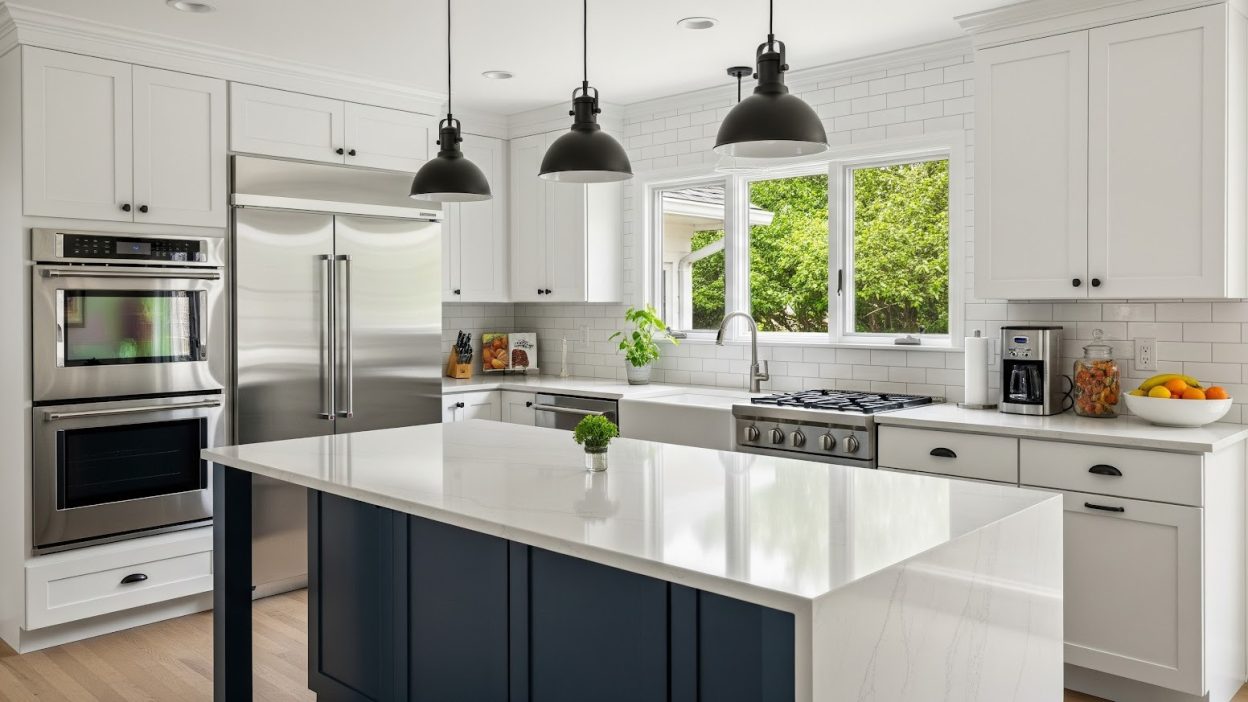
One of the most common regrets homeowners express after a kitchen remodel is not seeing all the design elements together before making final decisions. A countertop that looks stunning in a showroom can read very differently once it is surrounded by white shaker cabinets, a subway tile backsplash, and specific flooring.
A decorator-guided selection process addresses this problem directly. Rather than choosing materials in isolation, working with a designer who can lay slabs next to cabinet door samples and backsplash tiles in natural lighting conditions gives a far more accurate picture of the finished result. This approach reduces the risk of mismatched undertones, clashing textures, or unexpected contrast that only becomes visible after installation.
For Ohio homeowners pursuing a full kitchen renovation, coordinating countertop selection within the broader design process is one of the most valuable steps a remodeling professional can offer.
Which Material Is Right for Your Household?
The honest answer is that it depends on your priorities. If you cook heavily, entertain regularly, and want a surface that can handle heat without worry, granite is worth the annual sealing commitment. Its heat resistance and natural beauty make it a timeless choice for serious home cooks.
If low maintenance and design consistency matter more to you, quartz is the stronger option. Its non-porous surface requires no sealing, resists staining reliably, and can be specified with predictable patterning that coordinates easily with other design elements. Families with children who are not interested in tracking sealing schedules will often find quartz to be the more practical long-term choice.
Budget considerations are increasingly important as well. With tariff-related price movement on imported stone continuing into 2026, the traditional assumption that granite is always cheaper than quartz no longer holds consistently. Getting current, itemized quotes for both materials in your specific countertop layout is the most reliable way to compare costs for your project.
Final Thoughts: Making the Right Countertop Decision
The quartz vs granite kitchen countertops debate does not have a single correct answer, but it does have a right answer for each individual homeowner based on lifestyle, cooking habits, maintenance preferences, and design goals. Understanding the trade-offs between these two materials, getting accurate current pricing for your region, and seeing full slabs in the context of your overall design scheme will lead to a decision you are confident in for years to come.
Countertop selection is too important and too permanent to rush through. Taking the time to compare materials honestly, accounting for 2025 and 2026 pricing realities, and working through the design coordination process carefully makes the difference between a kitchen that just functions and one that you genuinely love every day. You can also explore local kitchen remodeling professionals near you to find experienced contractors in your area who can guide you through material selection and installation.
For more information on countertop care and selection, the National Kitchen and Bath Association and the Natural Stone Institute both offer consumer resources that can help you make a well-informed decision.
Frequently Asked Questions
1. How often does granite really need to be sealed?
Most granite countertops should be sealed once a year, though denser varieties may only require sealing every two to three years. A simple water bead test can confirm whether your current seal is still effective. If water absorbs into the surface within a few minutes rather than beading up, it is time to reapply sealant.
2. Can quartz countertops be repaired if they are chipped or cracked?
Minor chips in quartz can often be repaired using color-matched epoxy or resin filler kits available through countertop fabricators. More significant cracks may require section replacement. Because quartz is an engineered material, color matching on repairs is generally more achievable than with natural stone, though not always perfect.
3. Is granite or quartz better for resale value?
Both materials are considered premium upgrades that add value to a home. Real estate professionals generally view either material favorably compared to laminate or tile. The specific impact on resale value depends more on the quality of installation and the overall design coherence than on the material choice itself.
4. How are tariffs affecting countertop prices in Ohio in 2025 and 2026?
Expanded tariff schedules on imported stone and engineered surfaces have increased wholesale material costs for both granite and quartz products imported from key supplier countries including Brazil, India, Spain, and China. Ohio homeowners are seeing these costs reflected in installed pricing, with premium imported granite experiencing the most noticeable increases. Domestically quarried options have become relatively more competitive as a result.
5. What questions should I ask a contractor before selecting a countertop material?
Key questions include: Can I see full slabs rather than just small samples? How does this material coordinate with my cabinet and backsplash selections? What is the current installed price per square foot for both granite and quartz in my specific layout? What warranty is included on fabrication and installation? And for granite specifically: is sealing included in the installation, and what sealant do you recommend for ongoing maintenance?