
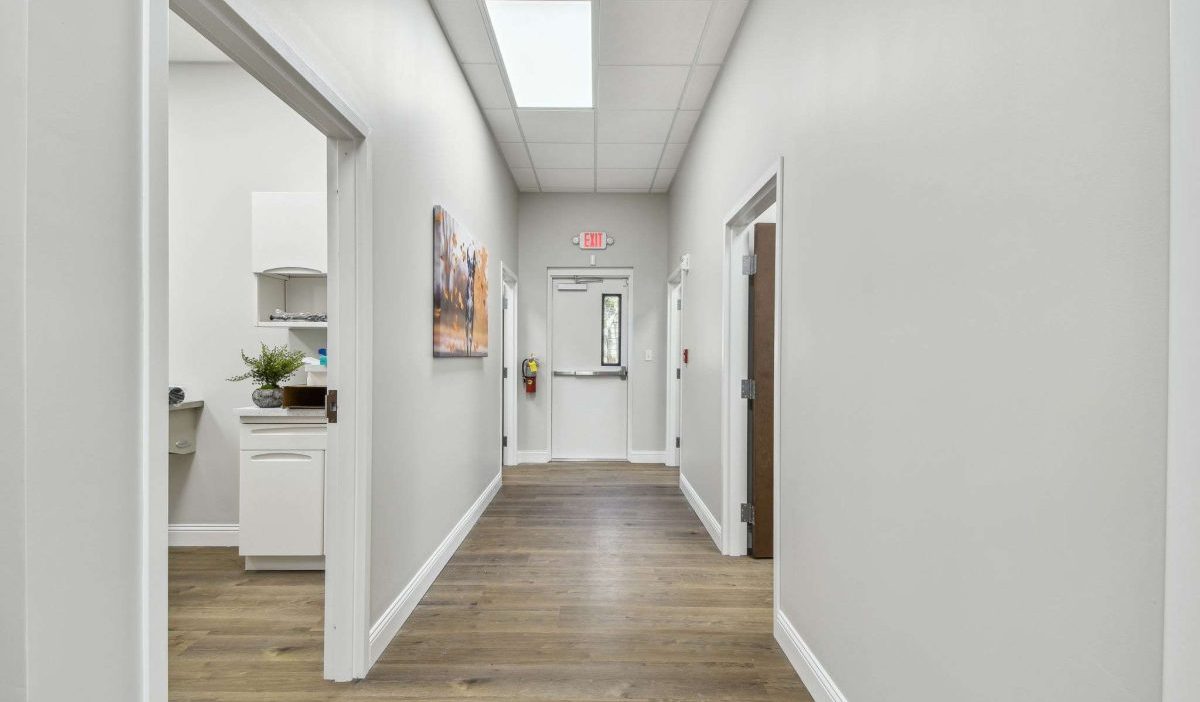
Building a veterinary clinic from the ground up is one of the most significant financial decisions a practice owner will ever make. Understanding the true veterinary clinic construction cost in Florida before signing a single contract is critical. Costs vary widely based on location, scope, specialty services, and local regulatory requirements. This guide breaks down the numbers in a realistic, Florida-specific way so you can plan with confidence. If you are exploring your next project, reviewing what goes into animal care facility construction will help you frame early budget discussions with contractors.
Average Cost Per Square Foot: New Construction vs. Leasehold Improvements
Understanding the baseline cost per square foot is the starting point for any budget conversation. In Florida, new ground-up veterinary clinic construction typically ranges from $250 to $450 per square foot, depending on the complexity of the build, the geographic area within the state, and current material costs. South Florida markets such as Miami-Dade and Broward tend to sit at the higher end of that range due to land costs and higher labor rates. Central Florida and the Tampa Bay area, including Pinellas County, generally fall in the middle range.
A standard small animal clinic of around 3,000 square feet could therefore cost anywhere from $750,000 to $1.35 million for construction alone, before accounting for land, site work, permitting, and equipment.
Leasehold improvements on an existing building present a different financial picture. When a veterinary practice takes over a previously built-out medical or commercial space and adapts it for clinical use, costs typically run between $120 and $220 per square foot. The savings come from existing utilities, HVAC infrastructure, and structural elements already in place. However, this approach comes with trade-offs. Older buildings may require significant upgrades to meet current Florida Building Code requirements for plumbing, ventilation, and accessibility. The layout of an existing space may also limit how efficiently the clinic can be designed.
For a 3,000-square-foot leasehold build-out, owners might budget $360,000 to $660,000. That is a meaningful savings compared to new construction, but it is important to conduct thorough due diligence on the base building before committing to a lease. Bringing in a commercial contractor experienced with medical and veterinary facilities early in the site selection process can help identify hidden costs that could erode those savings.
According to the American Animal Hospital Association (AAHA), facility design directly impacts patient flow, staff efficiency, and client experience, making thoughtful space planning an investment that pays dividends over time.
Specialty Build-Outs That Drive Up Costs
Not all square footage costs the same. Certain areas of a veterinary clinic require far more intensive construction and infrastructure than standard exam rooms or reception areas. Understanding where budget spikes occur helps owners prioritize and plan.
Surgical Suites are among the most expensive spaces to build in any veterinary facility. A properly equipped surgical suite requires positive or negative pressure ventilation systems, specialized lighting, medical gas lines (oxygen and nitrous oxide), seamless flooring for sterile environments, and specific ceiling heights. Build-out costs for a dedicated surgical suite can add $80,000 to $150,000 or more to a project, depending on size and the level of equipment integration built into the construction scope.
Radiology Rooms require lead-lined walls and ceilings to contain radiation, along with specific electrical requirements for imaging equipment. Depending on whether the clinic plans to install digital X-ray, fluoroscopy, or CT imaging, the construction cost for a single radiology room can range from $40,000 to $120,000. Regulatory compliance through the Florida Department of Health adds another layer of coordination that affects both cost and timeline.
Boarding Kennels present a different set of challenges. Proper kennel construction requires specialized plumbing for drains in each run, commercial-grade stainless steel or coated concrete surfaces that can withstand repeated sanitization, noise attenuation between runs, and HVAC systems capable of maintaining appropriate air exchange rates. A modest boarding addition with 20 to 30 runs can add $150,000 to $300,000 to a project.
Phased Construction as a Budget Strategy
One of the most practical approaches for managing upfront capital is phased construction. Rather than building out the full vision on day one, many practice owners work with their contractor and architect to design a facility that can be expanded in stages. For example, a clinic might open with core exam rooms, treatment areas, and a single surgical suite, with the structural and utility rough-in for a future radiology room or boarding wing already completed in the slab or walls. This approach costs slightly more upfront compared to ignoring future phases entirely, but it avoids the far greater expense and disruption of retrofitting a finished building later.
Phasing also allows the practice to use early revenue to fund later construction rather than carrying all of the debt from the start. Working with a contractor familiar with phased veterinary builds helps ensure that future expansions are truly seamless rather than awkward additions.
Permitting, Impact Fees, and Florida Building Code Requirements
Florida’s regulatory environment adds a layer of complexity and cost that many out-of-state consultants or first-time builders underestimate. In Pinellas County specifically, the permitting and fee structure reflects a market where development is active and infrastructure is under pressure.
Pinellas County Permitting Fees are calculated based on the valuation of the project. For a new commercial construction project valued at $1 million, permit fees alone can range from $8,000 to $20,000 depending on the specific permit types required. Veterinary clinics typically require building permits, mechanical permits, plumbing permits, electrical permits, and potentially specialty permits for medical gas systems or radiology rooms. Each permit has its own review timeline, and delays in any one can cascade through the schedule.
Impact Fees are charged by local governments to offset the infrastructure burden of new development on roads, utilities, schools, and parks. In Pinellas County, transportation impact fees for a new commercial facility can range from $5,000 to $30,000 or more depending on the size of the project and the traffic generation estimates associated with veterinary clinic use. Water and sewer impact fees are assessed separately and can add another $10,000 to $40,000 for a facility that includes boarding or grooming operations with higher water demand.
Florida Building Code (FBC) compliance is non-negotiable and adds cost that some owners do not anticipate. Florida’s building code is one of the most stringent in the country, particularly around wind resistance, given the state’s hurricane exposure. Pinellas County sits in a high-velocity hurricane zone, which means structural requirements for roofing, glazing, and wall systems are more demanding than in many other states. These requirements affect not just the structure itself but also HVAC penetrations, roof-mounted equipment, and exterior signage. Compliance with the FBC’s energy code (Florida Energy Efficiency Code) also requires specific insulation values, window performance ratings, and mechanical system efficiencies that add to material and installation costs.
Timeline Impact
Beyond direct costs, permitting affects project timelines in financially significant ways. A veterinary clinic project in Pinellas County should budget four to eight weeks for permitting review after complete documents are submitted, with additional time for comment cycles. Projects requiring site plan approval may add three to six months before a building permit is issued. Carrying costs on a construction loan during a permitting delay can add tens of thousands of dollars to a project’s total cost. Working with a contractor who has experience in local permitting helps minimize these delays.
For more detailed guidance on Florida Building Code requirements, the Florida Department of Business and Professional Regulation publishes updated code documents and resources for commercial project planning.
Other Cost Factors to Keep in Mind
Beyond construction, several additional line items commonly catch practice owners off guard. Land in Pinellas County and the Tampa Bay area trades at $15 to $40 per square foot or higher for commercial parcels. Site work, grading, utilities, and paving add another $50,000 to $150,000. Architectural and engineering fees typically run 8 to 12 percent of total construction cost. Medical equipment and casework not included in the general contractor’s scope represent an additional $100,000 to $300,000. Furniture, fixtures, and technology infrastructure add another $30,000 to $80,000.
When all costs are combined, including land, site work, construction, soft costs, equipment, and a 10 to 15 percent contingency, a realistic total project budget for a new 3,000 to 4,000 square foot veterinary clinic in Pinellas County ranges from $1.5 million to $2.8 million.
Final Thoughts on Planning Your Veterinary Clinic Build
Building a veterinary clinic in Florida is a substantial investment that, with the right planning, can serve a practice for decades. The keys to staying on budget are working with experienced professionals early, understanding Florida-specific regulatory and fee structures before committing to a site, and carrying a contingency fund of at least 10 to 15 percent of the total project cost. Phased construction, careful site selection, and early contractor engagement are the most effective strategies for managing costs without compromising clinical quality.
For veterinary professionals in the Tampa Bay area, you can find local project resources through this Google Maps location.
Frequently Asked Questions
1. What is a realistic budget for a new veterinary clinic in Pinellas County, Florida?
A realistic all-in budget for a new 3,000 to 4,000 square foot veterinary clinic in Pinellas County, including land, site work, construction, soft costs, and equipment, typically ranges from $1.5 million to $2.8 million. The final number depends heavily on site conditions, specialty build-outs, and the current cost of construction materials.
2. Is it cheaper to build a new veterinary clinic or renovate an existing commercial space?
Leasehold improvements on an existing building are generally less expensive upfront, running $120 to $220 per square foot compared to $250 to $450 per square foot for new construction. However, the savings can be reduced by code upgrade requirements, inefficient existing layouts, and the limitations of adapting a space not designed for veterinary use.
3. How long does it take to permit a new veterinary clinic in Pinellas County?
After complete permit documents are submitted, standard review timelines in Pinellas County typically run four to eight weeks. Projects requiring site plan approval or development review can add three to six months before a building permit is issued. Owners should build these timelines into their project schedules and loan structures.
4. What specialty rooms add the most cost to a veterinary clinic build?
Surgical suites, radiology rooms, and boarding kennels are the three highest-cost specialty areas. A surgical suite can add $80,000 to $150,000, a radiology room with radiation shielding can add $40,000 to $120,000, and a boarding kennel addition with full plumbing and HVAC can add $150,000 to $300,000 depending on size.
5. How can phased construction help manage the cost of building a veterinary clinic?
Phased construction allows practice owners to build the core clinical space first and expand into specialty areas such as boarding, radiology, or additional surgical capacity as revenue grows. By rough-in framing the infrastructure for future phases during initial construction, owners avoid the much greater cost and disruption of retrofitting a finished building later. This approach also reduces initial financing requirements and debt service.